Florida Glass Railing & Fencing Building Codes
Florida building code requirements for glass railings and pool barriers. FBC 2023, wind-borne debris region rules, wind speed design, and permits.
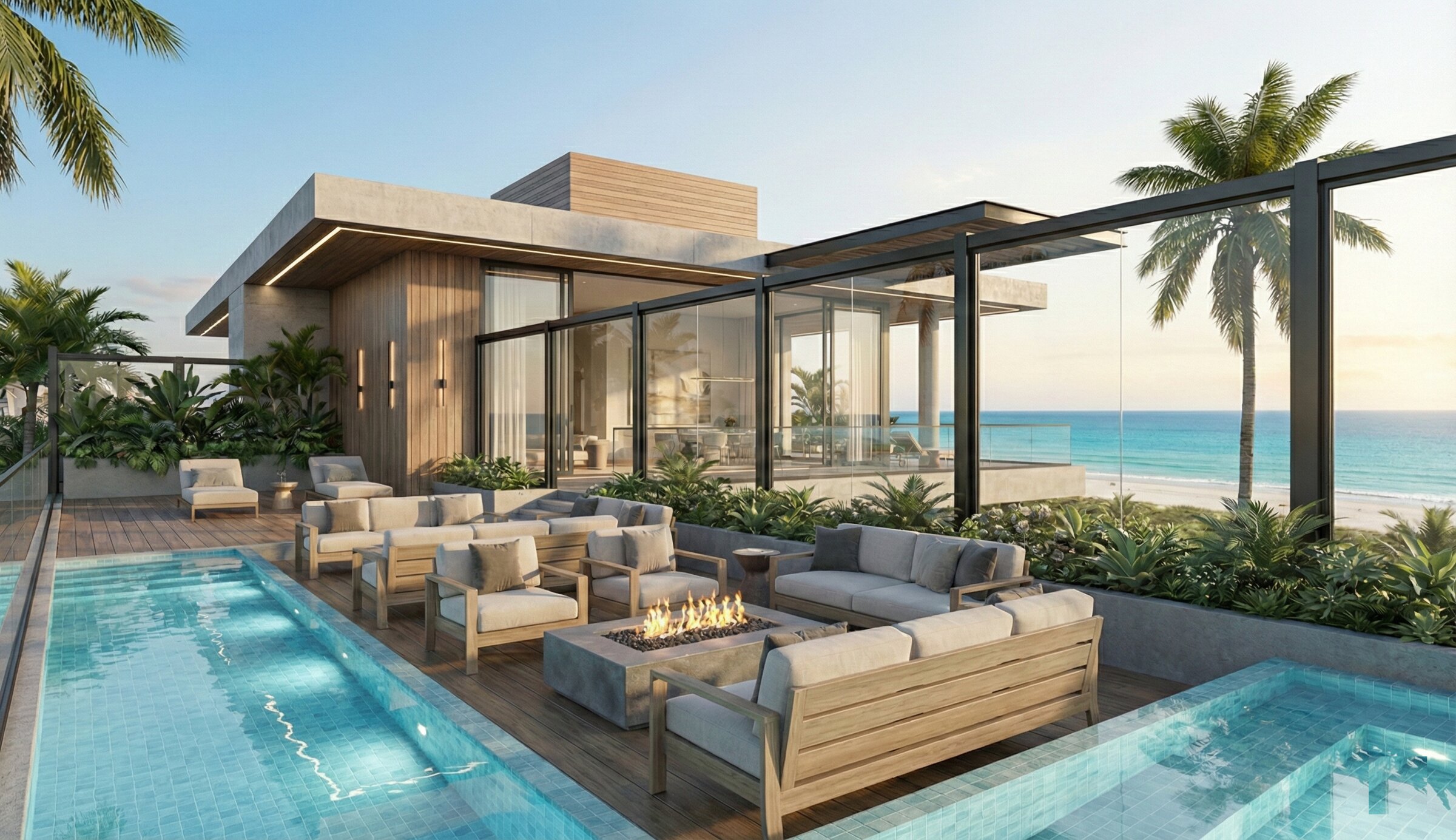
Florida enforces the most rigorous glass-related building codes in the United States. The Florida Building Code (FBC) 2023, 8th Edition, governs all glazing installations statewide, with stringent wind-borne debris region requirements throughout coastal Florida. Every exterior glass railing and fencing project must address impact resistance, wind pressure, and corrosion from coastal salt exposure.
Code Sections & Requirements
Guard / Railing Height
FBC Section 1015Residential guards: 36 in. min. at open sides of stairs, 42 in. at landings/balconies. Commercial guards: 42 in. min. Openings shall not permit passage of a 4-in. sphere.
Pool Barrier Requirements
FBC Residential R4501Pool barriers must be at least 48 in. high with no climbable elements. Self-closing, self-latching gates required. Glass panels must meet ASTM F1346 for opening size (no passage of a 4-in. sphere). Suction fittings per the Virginia Graeme Baker Act.
Safety Glazing
FBC Section 2406 / ANSI Z97.1All glass in hazardous locations (within 24 in. of a door, below 18 in. AFF in walls, or used as guards/railings) must be safety glazing. Tempered, laminated, or tempered-laminated glass meeting CPSC 16 CFR 1201 or ANSI Z97.1.
Wind Load / Impact
FBC Section 1620, ASCE 7-22Design wind speeds range from 130 mph inland to 180+ mph in the Florida Keys. Wind-borne debris regions throughout coastal Florida require large-missile impact testing per TAS 201/202/203 or impact-rated glazing with approved protection.
Glass Type
FBC Section 2404Exterior glazing in wind-borne debris regions must be laminated with PVB or SGP interlayer, or protected by approved shutters. Products must carry a Florida Product Approval for use in wind-borne debris regions.
Corrosion Resistance
FBC Section 2304.12.2.5Hardware within the coastal construction control line (CCCL) and all wind-borne debris regions must be corrosion-resistant. Marine-grade 316 stainless steel or marine-grade anodized aluminum is recommended for all coastal installations.
Residential vs. Commercial Requirements
| Requirement | Residential | Commercial |
|---|---|---|
| Guard Height | 36 in. (stairs) / 42 in. (balconies) | 42 in. minimum |
| Pool Barrier Height | 48 in. minimum | 48 in. minimum |
| Glass Type | Tempered or laminated safety glazing | Tempered or laminated safety glazing |
| Impact Rating | Required in WBDR | Required in WBDR |
| Wind Load Design | Per ASCE 7-22, Exposure C minimum | Per ASCE 7-22, Exposure C or D |
| Product Approval | FL Product Approval required | FL Product Approval required |
| Engineering Drawings | Required for permit | PE-stamped required |
| Permit Required | Yes — building permit | Yes — building permit + NOC |
Wind Zone Details
Florida wind speed zones range from 130 mph in north-central Florida to 180+ mph in the Keys. Wind-borne debris regions extend throughout most of the peninsula and panhandle coast, with the highest wind speed requirements in South Florida. All exterior glass must be designed for the site-specific wind speed per ASCE 7-22 with appropriate importance factors.
Permit Process in Florida
- Obtain PE-stamped engineering drawings showing wind load calculations per ASCE 7-22 for your specific address and exposure category.
- Submit permit application to local building department with product approval documentation (FL Product Approval number).
- Include manufacturer specifications, glass type, thickness, and interlayer detail for all glazing products.
- Schedule rough-in inspection after hardware/channel installation and before glass is set.
- Schedule final inspection after glass installation is complete. Inspector verifies product approval numbers, height, hardware, and workmanship.
- In wind-borne debris regions, additional plan review by a certified inspector may be required.
Frequently Asked Questions
Do I need a Florida Product Approval for glass railings in Florida?
Yes. Florida Product Approval is the standard requirement for glazing products used in wind-borne debris regions throughout Florida. Products must be tested and approved through the Florida Product Approval system, which involves independent third-party testing and evaluation.
What wind speed should glass railings be designed for in Florida?
Wind speed depends on your exact location. North-central Florida: 130-140 mph. Tampa Bay area: 140-150 mph. Southeast coast: 170-180 mph. Keys: 180+ mph. Your engineer must use the ASCE 7-22 wind speed maps and calculate loads based on building height, exposure category, and topographic factors.
Is tempered glass sufficient for pool fencing in Florida?
Tempered glass meets the safety glazing requirements in FBC Section 2406. However, if the pool fence is in a wind-borne debris region (most of coastal Florida), the glass must also be impact-rated, which typically requires laminated or tempered-laminated construction with PVB or SGP interlayer.
How much does a glass fence permit cost in Florida?
Permit fees vary by county. Typical residential glass fencing permits range from $150-$500 depending on scope. In South Florida counties, plan review and inspection fees may total $300-$800+ due to wind-borne debris region requirements. Commercial permits are generally higher based on project valuation.
Can I install glass pool fencing myself in Florida?
While Florida does not require a licensed contractor for all residential fence installations, pool barrier installations require a building permit and inspections. Given the engineering and code compliance complexity, professional installation is strongly recommended. Improperly installed pool barriers create serious drowning hazards and code violations.
What is the Florida Building Code requirement for glass thickness in railings?
The FBC does not prescribe a specific thickness. Instead, glass must be sized by a licensed engineer based on the design wind load, panel dimensions, mounting system, and glass type. Common specifications are 1/2-inch tempered for standard railings and 9/16-inch or 5/8-inch laminated tempered for wind-borne debris region and high-wind applications.
Are glass railings allowed on Florida high-rise balconies?
Yes. Glass railings are common on Florida high-rise balconies but require impact-rated glazing in wind-borne debris regions. The glass must be designed for the increased wind pressure at elevation, and fall-protection requirements mandate laminated glass so the panel holds together if broken.
Does Florida require corrosion-resistant hardware for glass railings?
The FBC requires corrosion-resistant fasteners and hardware in coastal areas within the CCCL. INFINITYGLASS specifies marine-grade 316 stainless steel as standard for all Florida installations regardless of distance from the coast, as the salt-laden atmosphere affects hardware well inland.
INFINITYGLASS™ Service Areas in Florida
Explore glass railing and fencing services in Florida cities:
Need Code-Compliant Glass Systems in Florida?
INFINITYGLASS™ provides PE-stamped engineering and permit-ready documentation for every project.
Get a Free Quote →