How to Remove Hard Water Stains from Glass Panels
Remove hard water stains from glass panels using safe and effective cleaning methods. Follow INFINITYGLASS™ tips and request maintenance support today.
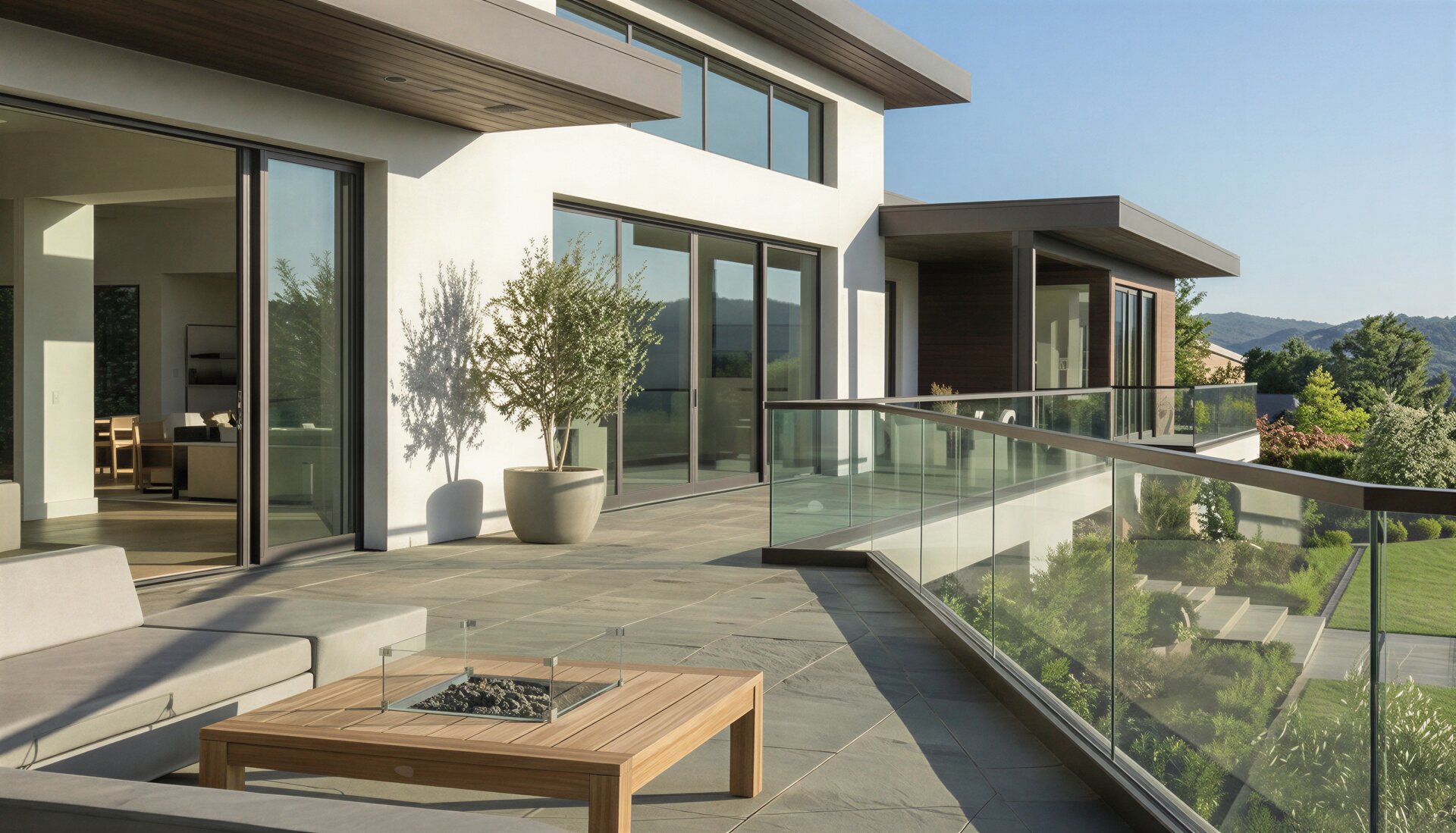
Hard water stains — those cloudy white or chalky deposits on glass — are the number one maintenance complaint from glass fence owners in areas with mineral-rich water. These deposits form when sprinkler spray, pool splash, or rainwater containing dissolved calcium and magnesium evaporates on the glass surface. Left untreated, mineral deposits bond chemically to the glass and become progressively harder to remove. This guide covers proven professional techniques from light haze to severe mineral crusting.
Tools Needed
Materials
Important Safety Warnings
- Never use hydrofluoric acid or products containing it on glass — it permanently etches the surface
- Do not use razor blades or metal scrapers on tempered glass — metal-on-glass contact can create scratches that concentrate stress and weaken the panel
- Wear chemical-resistant gloves and eye protection when using CLR, oxalic acid, or cerium oxide
Step-by-Step Instructions
Assess the severity of mineral deposits
Run your fingernail across the stained area. If you can feel a rough, raised texture, the minerals have bonded to the glass surface and will require chemical treatment. If the surface feels smooth and the stain appears only as a light haze, the deposits are surface-level and will respond to basic cleaning. Grade the severity: light (haze only), moderate (visible white spots, slight texture), or severe (thick white crusting, heavy texture).
Start with vinegar for light deposits
For light mineral haze, spray undiluted white vinegar directly onto the affected area. Let it sit for 5-10 minutes — the acetic acid dissolves calcium carbonate on contact. Scrub gently with a non-abrasive pad in circular motions, then rinse thoroughly with clean water. Repeat if necessary. Vinegar is the safest and cheapest first option.
Escalate to CLR for moderate deposits
When vinegar alone does not fully remove the stains, apply CLR (Calcium Lime Rust) remover. Follow the product instructions: apply undiluted to the stained area, let it dwell for 2-3 minutes, and scrub with a non-abrasive pad. CLR contains lactic acid and gluconic acid, which are more aggressive than vinegar but still glass-safe. Rinse thoroughly and immediately — do not let CLR dry on the glass.
Use oxalic acid for stubborn spots
Barkeeper's Friend contains oxalic acid, which effectively dissolves mineral deposits that resist vinegar and CLR. Make a thin paste with water, apply to the stained area, and scrub with a wet non-abrasive pad using moderate pressure. The mild abrasive in Barkeeper's Friend combined with the oxalic acid tackles deposits from both chemical and mechanical angles. Rinse completely.
Polish severe mineral bonding with cerium oxide
For severe hard water stains that have chemically bonded to the glass surface, cerium oxide polishing compound is the professional solution. Mix cerium oxide powder with water to form a slurry. Apply to the stained area using a felt polishing pad on an orbital buffer set to low speed (1,000-1,500 RPM). Work in small sections, keeping the surface wet. Cerium oxide microscopically polishes the glass surface, removing the bonded mineral layer.
Rinse and inspect under multiple lighting
After treatment, rinse the entire panel thoroughly with clean water — preferably distilled water in hard-water areas. Inspect the glass from multiple angles and in different lighting (direct sun, overcast, indoor lighting). Mineral deposits often hide in areas that looked clean during treatment. Touch up any remaining spots with the appropriate technique based on severity.
Apply protective glass sealant
After removing all mineral deposits, apply a hydrophobic glass sealant (rain-repellent coating) to prevent future buildup. Products like Rain-X or professional ceramic glass coatings cause water to bead and run off rather than evaporating in place. Apply per product instructions, typically by wiping onto clean dry glass and buffing with a microfiber cloth. Reapply every 3-6 months.
Address the water source to prevent recurrence
Removing hard water stains is pointless if the source continues hitting the glass. Adjust sprinkler heads so they do not spray glass panels. Install drip irrigation instead of overhead sprinklers near glass fencing. Add a water softener if your water hardness exceeds 10 grains per gallon. For pool splash, consider adjusting return jet angles to reduce splash onto glass barriers.
Frequently Asked Questions
Will hard water stains permanently damage glass?
Light to moderate hard water stains will not permanently damage tempered glass. However, severe mineral buildup left untreated for years can chemically bond to the glass surface at a molecular level, requiring professional cerium oxide polishing to remove. In extreme cases, the glass may develop a permanent haze even after treatment. Regular cleaning every 4-8 weeks prevents permanent bonding.
Can I use a razor blade to scrape off mineral deposits?
No. While razor blades are sometimes used on regular window glass, they should never be used on tempered glass fence panels. Microscopic metal particles from the razor can embed in the glass surface, and any scratches on tempered glass create stress concentration points that can lead to spontaneous breakage. Use chemical removal methods only.
How do I prevent hard water stains from forming?
Three strategies: (1) Redirect or adjust sprinklers so they do not contact glass panels, (2) Apply a hydrophobic glass sealant every 3-6 months so water beads and rolls off instead of evaporating in place, and (3) Rinse glass panels with clean water within 24 hours of exposure to mineral-laden water (sprinkler, pool splash).
Is vinegar safe for glass fence hardware?
Vinegar is safe for stainless steel hardware but should not be left on aluminum components for extended periods, as the acetic acid can etch anodized finishes. When using vinegar on glass panels, avoid prolonged contact with aluminum channels and frames. Rinse all hardware thoroughly after cleaning.
How often should I treat glass panels in hard water areas?
In areas with water hardness above 10 grains per gallon (common in the Southwest, Florida, and parts of Texas), clean glass panels every 2-4 weeks and reapply hydrophobic sealant every 3 months. This maintenance cadence prevents mineral deposits from bonding to the glass surface and keeps cleaning effort minimal.