How to Add Privacy to Glass Fencing
Add privacy to glass fencing with smart solutions for comfort and style. Contact INFINITYGLASS™ today for expert help and request a custom project quote now.
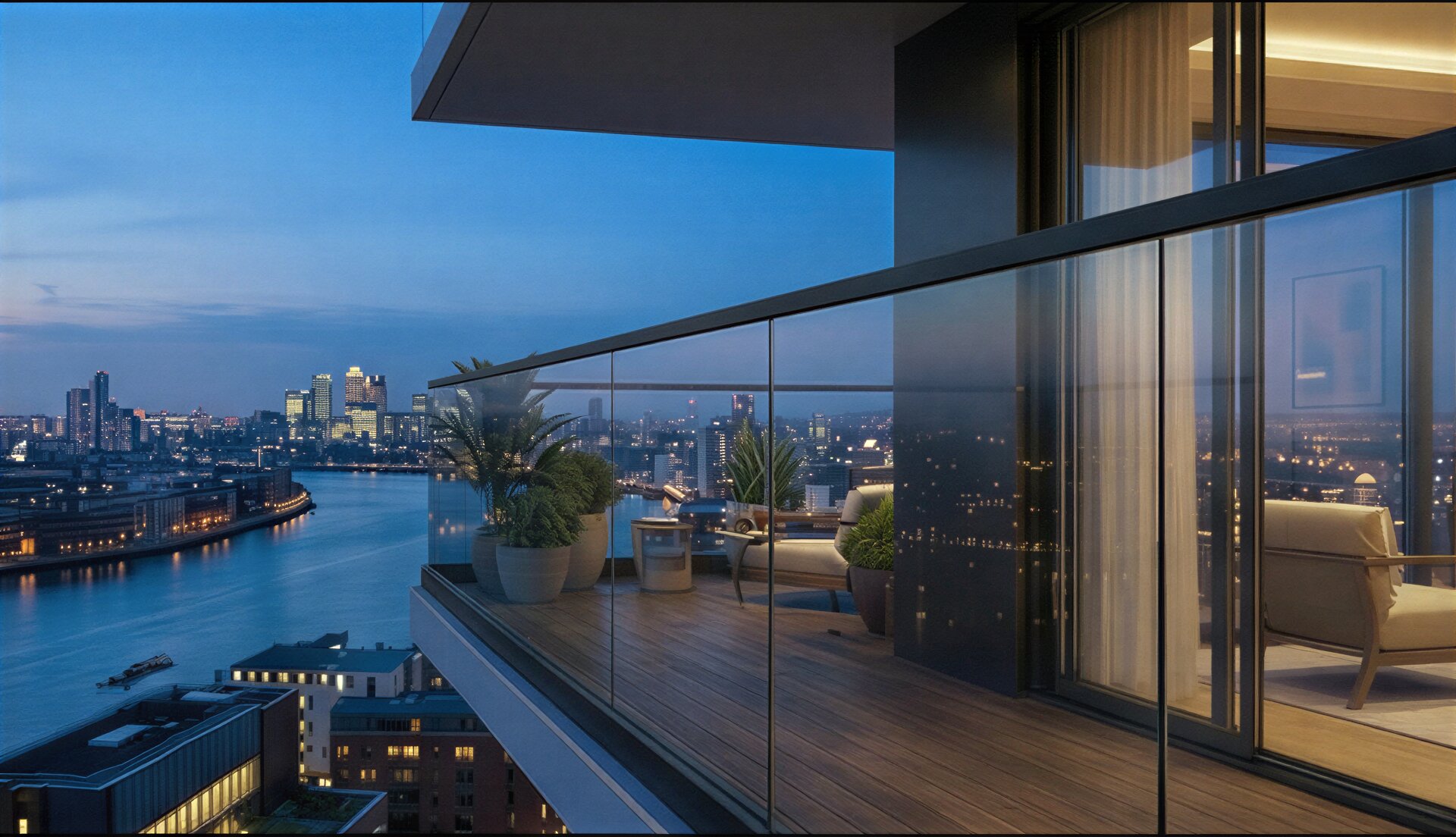
Glass fencing is prized for transparency, but there are situations — pool changing areas, hot tub enclosures, side-yard boundaries, and closely spaced homes — where some degree of privacy is needed. The good news: you do not have to choose between glass aesthetics and privacy. Multiple solutions exist that range from full opacity to subtle screening, each with different cost, maintenance, and appearance characteristics. This guide covers every practical approach to adding privacy to glass fencing without sacrificing the premium look.
Step-by-Step Instructions
Define your privacy level needed
Privacy needs vary dramatically. Full privacy means no visibility from either side (bathroom-adjacent areas, hot tub enclosures). Moderate privacy provides silhouette-level screening — you can see movement but not detail (side-yard boundaries, pool changing areas). Light privacy simply diffuses direct sightlines while maintaining brightness and an open feel (closely spaced homes, restaurant patios). Defining your target level prevents over-spending on more privacy than you need.
Consider factory-frosted glass panels
Acid-etched or sandblasted frosted glass is the highest-quality privacy option. The frosting is permanent, uniform, and integral to the glass — it cannot peel, bubble, or degrade. Factory frosting provides moderate to high privacy while transmitting approximately 80% of light. One-side frosted glass can provide a smooth exterior and textured interior (or vice versa). Full panel frosting or partial frosting (a privacy band at eye level with clear glass above and below) are both available.
Evaluate privacy film for existing clear panels
Adhesive privacy films can be applied to existing clear glass panels to add privacy without replacing glass. Options include: frosted film (mimics acid-etched glass), one-way mirror film (privacy during daytime only), decorative pattern films (geometric or organic patterns), and gradient films (frosted at bottom, transitioning to clear at top). Film is the most cost-effective retrofit solution but has a shorter lifespan (5-10 years) than factory frosting.
Integrate planters and greenery
Strategic landscaping creates natural privacy screening that complements glass fencing beautifully. Options include: tall ornamental grasses in planters along the fence line (3-5 feet of screening), clumping bamboo in contained planters (fast-growing, dense screening), trained vine plants on a trellis positioned behind the glass, and large potted plants at key sightlines. Living screens soften the glass appearance while providing privacy that increases over time as plants mature.
Explore hybrid glass-and-solid designs
Hybrid designs combine glass panels with solid elements for targeted privacy. Common configurations: alternating glass and solid panels (stone, wood, composite), glass top with solid base (36-inch solid wall topped with glass railing), solid sections at private areas transitioning to glass at view corridors, and privacy screens mounted on the interior side of specific glass panels. Hybrid designs allow you to preserve views where you want them and add privacy where you need it.
Consider ceramic frit or digital printing
Ceramic frit glass features a fired-on ceramic pattern (dots, lines, gradients, or custom artwork) that provides partial privacy while maintaining a designed aesthetic. The ceramic is fused to the glass during tempering, making it permanent and weather-resistant. Digital ceramic printing allows photographic-quality imagery or complex patterns to be printed directly on the glass. These options are premium-priced but create one-of-a-kind installations.
Select the right solution for your situation
Match the privacy solution to your specific constraints: For new installations, factory frosted glass offers the best long-term value. For retrofitting existing clear panels, privacy film is the most practical and reversible option. For partial privacy needs, planters and landscaping provide a natural, evolving solution. For high-design projects, ceramic frit or hybrid designs create distinctive custom installations. Budget, timeline, and permanence should guide your final decision.
Frequently Asked Questions
Does frosted glass reduce light transmission?
Frosted glass reduces visible light transmission by approximately 15-25% compared to clear glass, depending on the frosting density. This means a frosted panel still transmits 75-85% of available light — far more than solid fencing materials. Most people do not notice a significant reduction in brightness with single-side frosted panels. The light that passes through is softly diffused rather than directional.
Can I add privacy film to tempered glass outdoors?
Yes, but you must use exterior-grade privacy film specifically rated for outdoor applications. Exterior film has UV-stabilized adhesive and a hardcoat surface that resists weathering, temperature cycling, and sun degradation. Standard interior window film will fail rapidly on outdoor glass. Professional installation with exterior-grade film typically lasts 7-10 years before replacement is needed.
Will privacy modifications affect my glass fence warranty?
Factory-applied privacy treatments (frosted glass, ceramic frit) do not affect structural warranties because they are applied before tempering. Aftermarket adhesive films generally do not affect structural warranties but may void cosmetic finish warranties if the film adhesive damages the glass surface upon removal. Check with your installer before applying aftermarket products.
Can I frost only part of a glass panel?
Yes, partial frosting is a popular option. Common patterns include: a privacy band at eye level (typically 36-60 inches from the bottom) with clear glass above and below, gradient frosting that transitions from opaque at the bottom to clear at the top, or frosted lower half with clear upper half. Partial frosting is applied before tempering, so panel positions must be determined at the time of glass fabrication.
What is the most cost-effective privacy option for glass fencing?
Privacy film is the most cost-effective option at $8-$15 per square foot including professional installation (compared to $15-$30 per square foot premium for factory frosted glass). However, film has a 7-10 year lifespan while factory frosting is permanent. Over a 20-year period, factory frosted glass is actually more cost-effective despite the higher initial investment.