How to Design a Glass Fence for Your Pool
Design glass fence for pool areas with focus on safety, visibility and compliance. Contact INFINITYGLASS™ today for expert help and a custom project quote now.
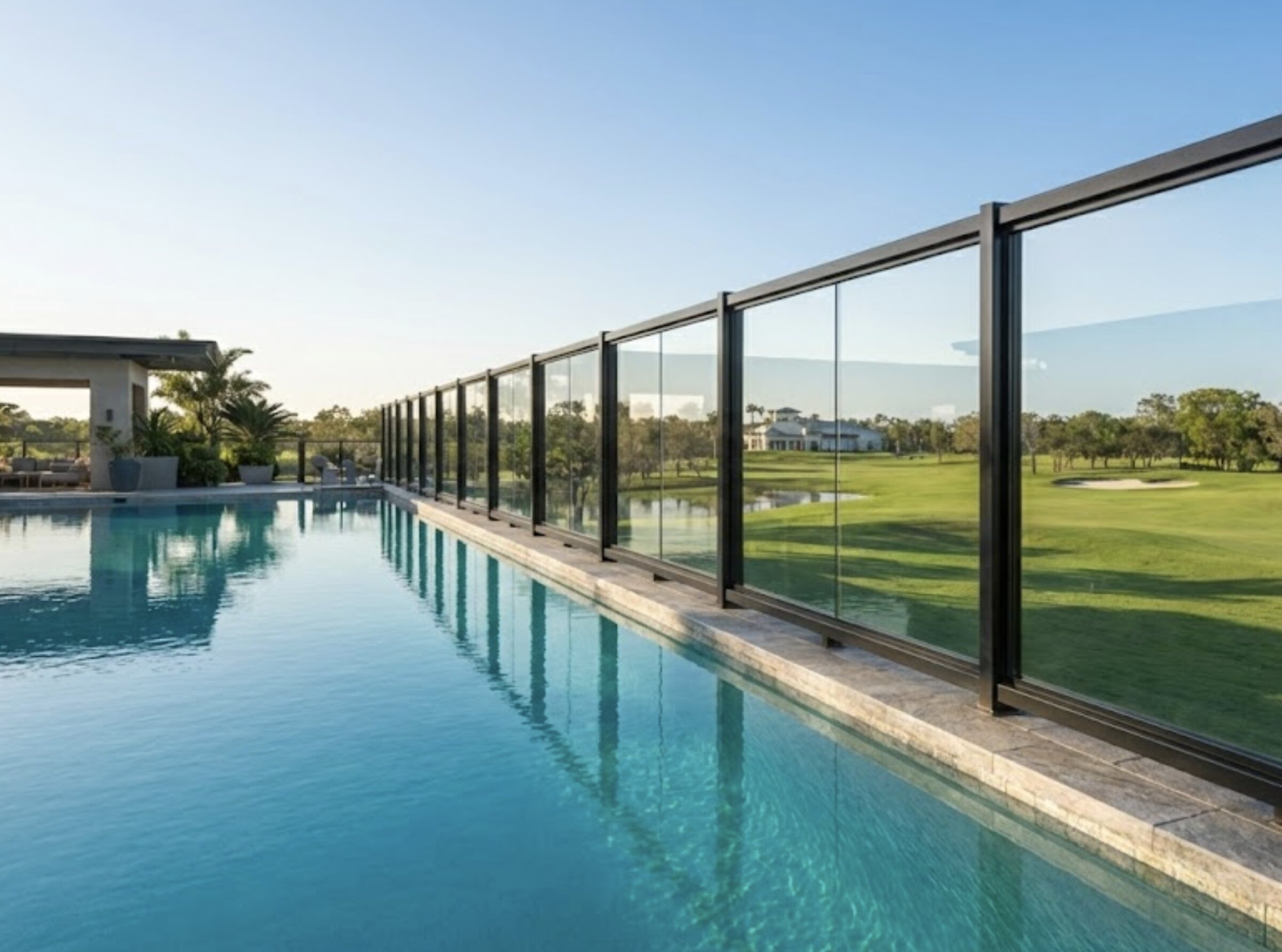
A glass pool fence is one of the most popular applications for architectural glass fencing. It provides the code-required safety barrier while maintaining the open, resort-style aesthetic that makes your pool area inviting. Designing a glass pool fence involves balancing strict building code requirements with aesthetic goals and practical considerations. This guide takes you through the complete design process.
Step-by-Step Instructions
Review pool barrier code requirements
Pool barrier codes are among the most stringent building requirements. Key requirements in most jurisdictions: minimum 48-inch barrier height (some codes require 60 inches), no openings that pass a 4-inch sphere, no climbable features within 36 inches of the barrier, self-closing and self-latching gates with latches at least 54 inches above grade, gate must open away from the pool. Check ISPSC (International Swimming Pool and Spa Code) and your local amendments - some jurisdictions have stricter requirements.
Plan the barrier layout
Map the pool barrier perimeter including: total linear footage, number and location of gates (minimum one, placed for convenient access while maintaining safety), corner types (90-degree, obtuse, acute), connection points to the house or other structures, and any elevation changes. The barrier must completely enclose the pool with no gaps or climbable bypasses. If the house wall forms part of the barrier, all house doors opening to the pool area must have self-closing and self-latching mechanisms or alarms.
Select the mounting system
For pool fencing, the two primary mounting options are: (1) Base shoe/channel mount (frameless) - glass panels sit in a continuous channel anchored to the pool deck, creating the most transparent and modern appearance. (2) Post-mount with glass infill - glass panels between spigots or mini-posts. Base shoe systems are more popular for premium pool fencing because they provide uninterrupted glass surfaces. Consider your deck material: concrete, pavers, stone, and wood each have different anchoring requirements.
Specify glass type and thickness
Pool fencing typically requires: minimum 1/2-inch tempered safety glass per ANSI Z97.1. For frameless (no top rail) systems, 1/2-inch is standard for panels up to 48 inches tall. Taller panels or high-wind areas may require 5/8-inch or 3/4-inch glass. In hurricane zones, tempered-laminated glass may be required. Low-iron glass is highly recommended for pool fencing to eliminate the green tint that becomes noticeable when looking through the glass at pool water.
Design gate specifications
Pool gates require special attention: width of 36-48 inches (wider for furniture access), self-closing hinges (spring-loaded or hydraulic), self-latching hardware at minimum 54 inches above grade, opening direction away from the pool, and 180-degree opening capability if the gate is in a corner. Some jurisdictions require key-lockable gates. For frameless aesthetics, glass gates with concealed hydraulic hinges provide a seamless look matching the adjacent panels.
Plan drainage and deck integration
Glass pool barriers can affect deck drainage patterns. Plan for: weep holes in channel-mount systems to prevent standing water, deck slope directing water away from glass panel bases, clearance between the bottom of glass panels and the deck surface (typically 1-2 inches per code to prevent water damming), and any deck drains that may conflict with post or channel anchor locations. Integration with coping and the pool edge should be aesthetically seamless.
Prepare for permit submission
Pool barrier permits typically require: a site plan showing the complete barrier perimeter with dimensions, gate locations and specifications, PE-stamped engineering drawings, glass specifications and safety glazing certification, hardware specifications, and details of connections to existing structures. Submit early, as pool barrier plan reviews may be more thorough than standard railing permits.
Frequently Asked Questions
How much does a glass pool fence cost?
Frameless glass pool fencing typically costs $250-$600 per linear foot installed, depending on glass thickness, hardware quality, and installation complexity. For a typical 60-linear-foot pool enclosure, budget $15,000-$36,000. Post-mounted glass pool fencing costs $150-$350 per linear foot. Add $1,500-$3,000 per glass gate. Premium low-iron glass adds 15-25% to the glass component cost.
Can I use frameless glass for a pool fence?
Yes, frameless (channel-mount) glass pool fencing is one of the most popular pool barrier designs. It meets all building code requirements when properly engineered and installed with code-compliant glass thickness and height. The continuous glass surface with no posts or top rail creates the most transparent pool barrier available, preserving views and creating a resort-like atmosphere.
What is the minimum height for a glass pool fence?
Most US jurisdictions require a minimum 48-inch pool barrier height per ISPSC/IBC. Some local codes require 54 or 60 inches. The measurement is from the exterior grade (walking surface outside the pool area) to the top of the glass panel. There must be no climbable features (plants, furniture, structures) within 36 inches of the barrier exterior that could help a child scale the barrier.
Do I need a self-closing gate for a glass pool fence?
Yes. All pool barrier gates must be self-closing and self-latching per code. The self-closing mechanism (spring-loaded or hydraulic hinges) must close the gate from any open position. The self-latching mechanism must engage automatically when the gate closes. The latch release must be at least 54 inches above the ground on the pool side. These requirements exist to prevent unsupervised child access to the pool area.