Glass Fencing vs. Composite Fencing
Glass fencing vs. composite fencing: durability, maintenance, aesthetics, cost, eco-friendliness, and best uses for pools, decks, and modern homes compared.
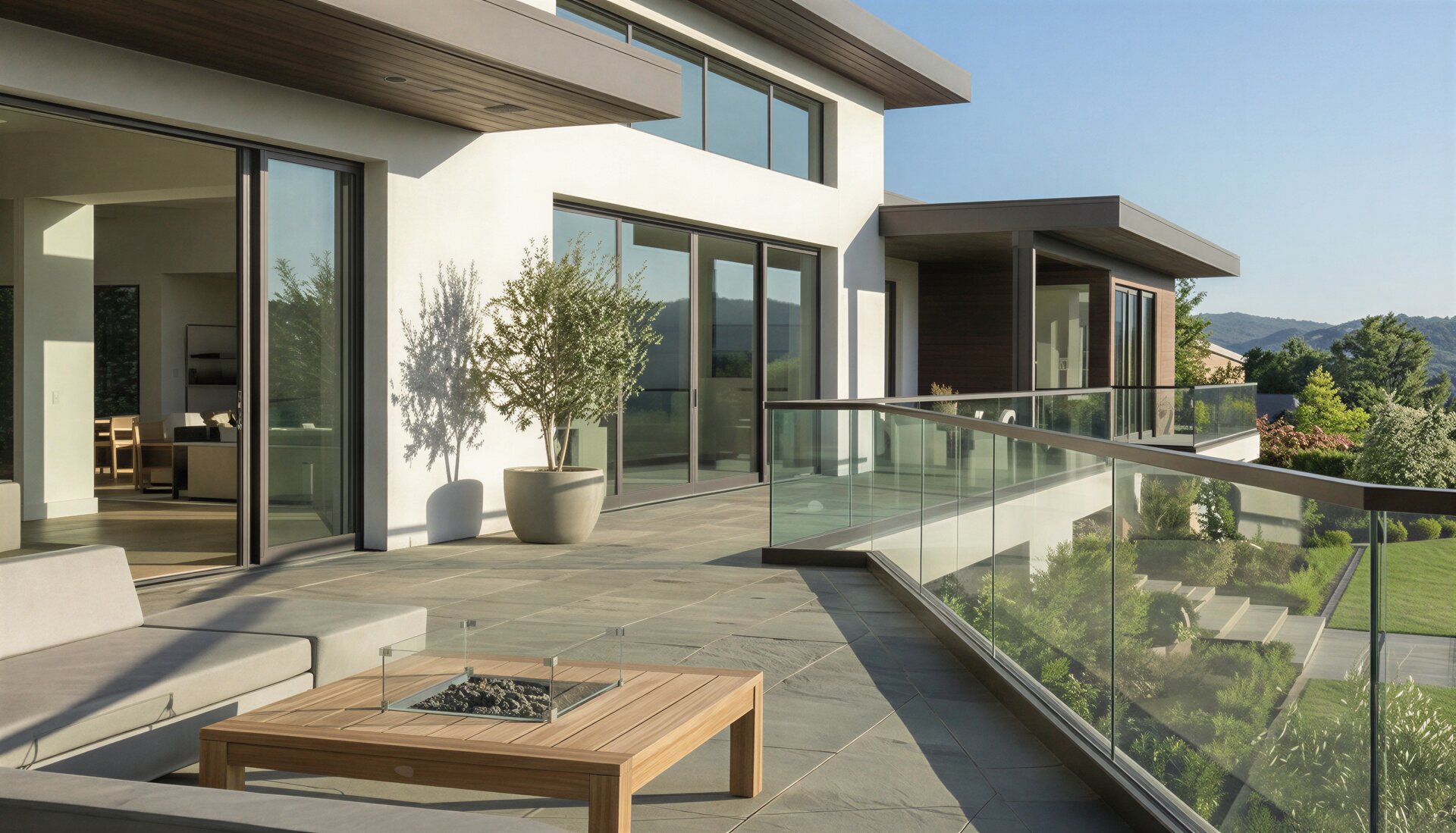
Composite fencing — made from a blend of wood fibers and recycled plastic — has emerged as a popular alternative to traditional wood. Glass fencing occupies the premium tier for transparency and modern aesthetics. Both are marketed as low-maintenance solutions, but they serve fundamentally different design goals. This guide provides an honest, data-driven comparison.
Pros & Cons
Glass Fencing
- Full view transparency
- Complete wind protection
- Non-climbable surface for pool safety
- Does not fade, warp, or degrade from UV
- 25-50+ year lifespan
- Increases property value 5-15%
- Higher upfront cost ($150-$500/ft)
- No privacy unless frosted or tinted
- Shows water spots and fingerprints
- Professional installation required
Composite Fencing
- No painting or staining required
- Moderate cost ($30-$70/ft)
- Full privacy options
- Resistant to rot, insects, and moisture
- Made from recycled materials
- Available in wood-grain textures and multiple colors
- Fades over time despite UV inhibitors
- Can warp or sag in extreme heat (120°F+)
- Blocks all views
- Not suitable as a pool barrier (climbable rails)
- Limited repair options — damaged boards must be replaced
- Heavier than wood (harder to DIY)
Feature-by-Feature Comparison
| Feature | Glass Fencing | Composite Fencing |
|---|---|---|
| View Preservation | Full transparency | None (opaque) |
| Privacy | None (clear) / optional tinted | Full privacy |
| Wind Protection | Complete windbreak | Partial (depending on style) |
| Upfront Cost | $150-$500/ft | $30-$70/ft |
| Lifespan | 25-50+ years | 15-25 years |
| UV Resistance | Unaffected | Fades over time |
| Heat Tolerance | Unaffected | Can warp above 120°F |
| Eco-Friendliness | Recyclable glass and aluminum | Made from recycled materials |
| Pool Safety | Non-climbable | Climbable (horizontal rails) |
| Property Value Impact | +5-15% | Neutral to slight positive |
Best For: Which Should You Choose?
The Verdict
Glass and composite fencing serve completely different purposes. Composite is a practical, mid-range privacy fence that eliminates the maintenance burden of wood. Glass is a premium transparent barrier that preserves views, blocks wind, and enhances property value. For pool safety and view-critical applications, glass is clearly superior. For privacy fencing on a moderate budget, composite delivers solid value.
Frequently Asked Questions
Does composite fencing really require no maintenance?
Not exactly. While composite does not need painting or staining like wood, it does require periodic power washing to remove mold, mildew, and algae buildup. In humid climates (Florida, Gulf Coast), cleaning may be needed 2-3 times per year. Over time, UV exposure causes fading that cannot be reversed — the boards must be replaced.
Can composite fencing be used around a pool?
Composite fencing can meet height requirements for pool barriers, but it has limitations: horizontal rails and board patterns can be climbable, it blocks sightlines to the pool making swimmer supervision difficult, and constant splash exposure can promote mold growth between boards. Glass is the preferred material for pool barriers due to its non-climbable surface and clear visibility.
Does composite fencing warp in extreme heat?
Yes. Most composite boards begin to sag or warp when surface temperatures exceed 120-140°F, which is common in direct Arizona, Texas, or Nevada sun. Dark-colored composite absorbs more heat and warps sooner. Glass fencing is completely unaffected by temperature extremes — tempered glass withstands temperature differentials of 300°F+ without stress.
How long does composite fencing actually last?
Composite manufacturers typically warranty their products for 15-25 years, but visible degradation (fading, chalking, mold staining) often begins at 8-12 years. Unlike wood, composite cannot be sanded, stained, or refinished — degraded boards must be replaced entirely. Glass fencing maintains its appearance indefinitely and lasts 25-50+ years with no degradation.
Is composite fencing truly eco-friendly?
Composite fencing contains recycled materials (typically 50-95% recycled wood and plastic), which is genuinely better than virgin materials. However, composite is difficult to recycle at end-of-life because the blended materials cannot be separated. Glass is infinitely recyclable. Over a 50-year period, one glass installation versus 2-3 composite replacements may result in less total waste despite the higher initial material investment.
Is glass fencing more sustainable than composite?
Both have sustainability advantages. Composite uses recycled wood and plastic. Glass is infinitely recyclable and its 25-50+ year lifespan means fewer replacement cycles. Aluminum framing is also highly recyclable. Over a 50-year period, one glass fence installation replaces 2-3 composite fence lifecycles, reducing total material consumption.
Which handles coastal salt air better?
Glass fencing with marine-grade 316 stainless steel hardware is purpose-built for coastal environments. Composite fencing resists salt better than wood but can still develop surface degradation and fastener corrosion over time in heavy salt exposure. For oceanfront applications, glass is the more durable choice.
Can I mix glass and composite fencing on the same property?
Yes, and many premium properties do exactly this. Glass is ideal where views matter — pool barriers, deck railings, and oceanfront edges. Composite works well for privacy sections like side yards and service areas. This hybrid approach optimizes both budget and aesthetics.
More Comparisons
Back to Glass Fencing Guide | Cost Guide | How-To Guides | Solutions | Glossary