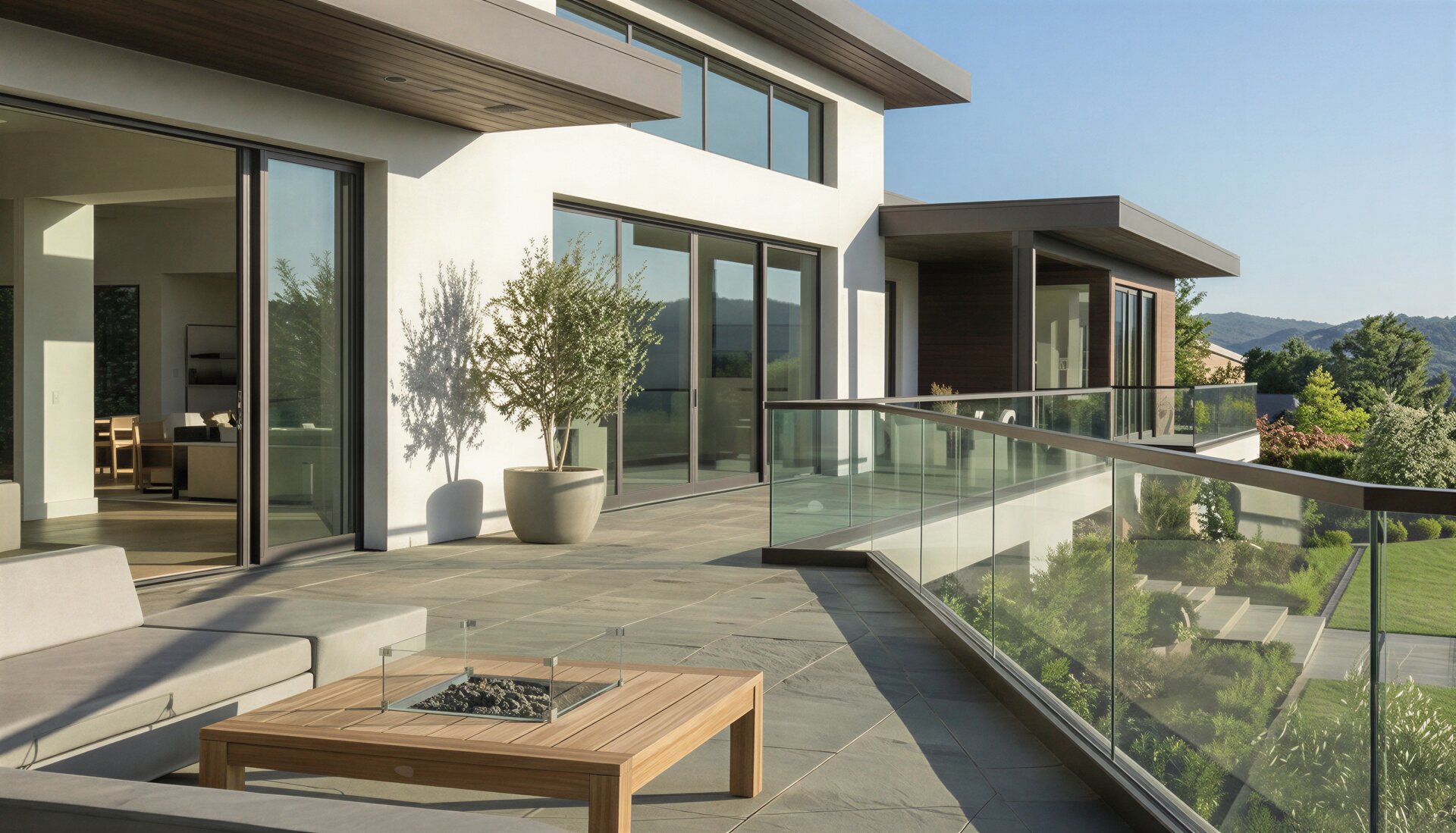
Four-Season Performance
Central Ohio cycles through freeze and thaw repeatedly each winter and carries a real ground snow load, so base connections and drainage detailing govern long-term performance. Summers are humid rather than corrosive. The practical implication is that hardware selection here is about resisting water intrusion and de-icing chemicals at grade, not marine corrosion.
Recommended Systems for Columbus
Four-season climates require glass systems engineered for the full temperature range with freeze-thaw resistant mounting, proper drainage provisions, and hardware rated for both summer heat and winter cold. INFINITYGLASS temperate-climate specifications balance durability with cost-efficiency for moderate engineering requirements.
Boundless Frameless Railing
Engineered for Columbus conditions with site-specific calculations and local code compliance.
Learn more →Framed Post Railing
Engineered for Columbus conditions with site-specific calculations and local code compliance.
Learn more →High-Wall Enclosure System
Engineered for Columbus conditions with site-specific calculations and local code compliance.
Learn more →INFINITYFLEX Modular Partition
Engineered for Columbus conditions with site-specific calculations and local code compliance.
Learn more →Popular Projects in Columbus
Building Codes & Regulations
Columbus reviews permits through the Department of Building and Zoning Services under the 2024 Ohio Building Code, which took effect March 1, 2024 and is based on the 2021 IBC. Guard glazing is covered by the OBC glass and glazing chapter, which follows IBC Section 2407: glass in a handrail or guard must be laminated glass constructed of fully tempered or heat-strengthened glass and comply with Category II of CPSC 16 CFR Part 1201 or Class A of ANSI Z97.1, and glazing in guards and railings is treated as a hazardous location regardless of panel area or height above the walking surface. Guard assemblies are designed for a 200 pound concentrated load and a 50 pound per linear foot uniform load, and panels carry permanent labels identifying manufacturer, glass type and thickness. Commercial guard height follows OBC Section 1015 at 42 inches; the 36 inch figure that circulates locally comes from the Residential Code of Ohio and should not be applied to a commercial project.
INFINITYGLASS™ provides PE-stamped engineering drawings for permit submittal in Columbus and all Ohio jurisdictions.
Frequently Asked Questions: Glass Fencing in Columbus
What code applies to glass railings in Columbus?
The 2024 Ohio Building Code, effective March 1, 2024 and based on the 2021 IBC, administered by Building and Zoning Services.
How tall does a commercial glass guard need to be in Columbus?
42 inches under OBC Section 1015 for most occupancies. The 36 inch figure applies to residential work under the Residential Code of Ohio.
What glass does Ohio require in a guard?
Laminated glass constructed of fully tempered or heat-strengthened glass, complying with CPSC 16 CFR Part 1201 Category II or ANSI Z97.1 Class A.
Is glazing in a guard always a hazardous location in Ohio?
Yes. Glazing in guards and railings, including structural baluster panels and nonstructural infill, is treated as a hazardous location regardless of area or height.
Do glass panels need labels?
Yes. Panels carry permanent labels identifying manufacturer, glass type and thickness.
How does an Ohio winter affect a glass railing system?
Freeze-thaw and de-icing chemicals act on the base connection. Drainage detailing and appropriate stainless selection at grade are what prevent staining and loosening.