How to Comply with Pool Fence Height Requirements
Comply with pool fence height requirements using clear safety rules and code guidance. Get help from INFINITYGLASS™ and request compliance support today.
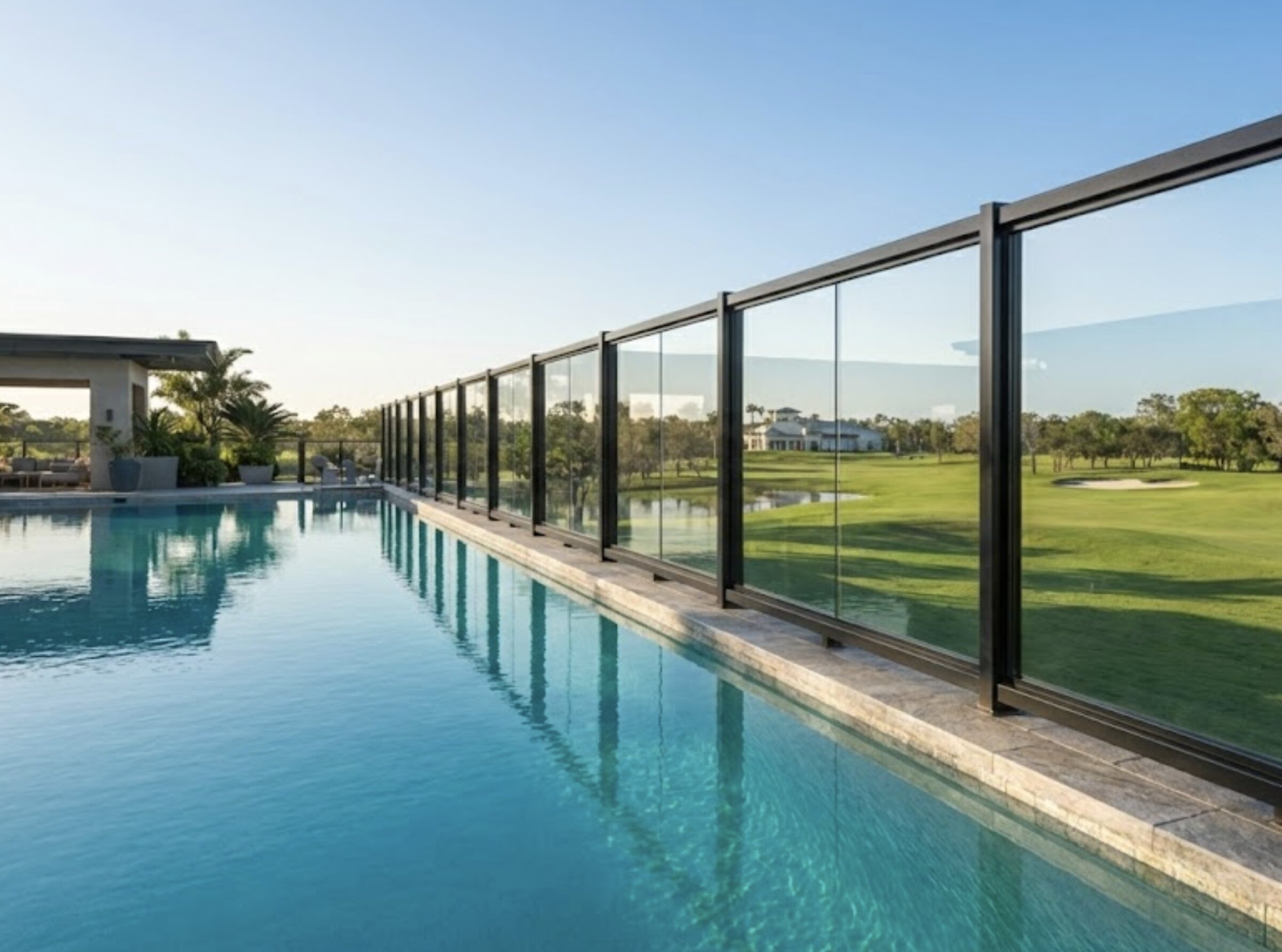
Pool fencing is the most heavily regulated category of residential fencing in the United States. Every state has specific height requirements, and many municipalities add additional restrictions. Non-compliance can result in fines, forced removal, denied insurance claims, and — most importantly — represents a genuine child safety hazard. Glass pool fencing is an excellent compliance choice because smooth, frameless panels eliminate climbable features, but height, gate, and opening requirements still apply. This guide covers the key code requirements you need to know.
Important Safety Warnings
- Pool barrier code compliance is a life-safety issue — children can drown in less than 30 seconds and in as little as 2 inches of water
- Never prop open or disable self-closing gate mechanisms, even temporarily during a pool party
- Maintaining code compliance is an ongoing obligation — regularly check that no new climbable objects have been placed near the barrier
Step-by-Step Instructions
Identify your governing pool barrier code
Pool barrier requirements come from multiple sources: your state building code, local municipal code, and in some cases HOA requirements. The International Residential Code (IRC) Section R326 sets the baseline, but many states adopt modified versions. Florida, California, Arizona, and Texas have particularly detailed pool barrier codes. Contact your local building department to confirm which specific code edition and amendments apply to your property.
Verify minimum barrier height
The IRC baseline minimum pool barrier height is 48 inches measured from the finished ground surface on the exterior side (the side away from the pool). Some states require more: Oregon mandates 48 inches, California requires 60 inches for new construction since 2007, and some Florida jurisdictions require 54 inches. Measure from the highest point of the finished grade within 36 inches of the barrier exterior to the top of the barrier. Do not assume 48 inches is sufficient without checking your specific jurisdiction.
Understand non-climbable zone requirements
Pool barriers must not have features that enable climbing. The IRC requires that the barrier have no footholds or handholds between 0 and 45 inches above grade on the exterior side. For glass fencing, this is inherently achieved — smooth glass provides no climbable surface. However, adjacent landscaping, furniture, retaining walls, or structures within 36 inches horizontally of the barrier can create a climbing path and violate the non-climbable zone. Remove or relocate any objects that could serve as stepping aids.
Check maximum opening requirements
Pool barriers must not have openings large enough for a child to pass through. Per ASTM F1346, no opening in the barrier shall allow passage of a 4-inch sphere. For glass panel fence systems, the gaps between panels and between panels and posts must be less than 4 inches. The gap between the bottom of the barrier and the ground must also be less than 4 inches (2 inches in some jurisdictions with gravel or loose-fill surfaces underneath).
Specify compliant gate hardware
Pool gates are the most scrutinized component during inspection. Requirements include: self-closing hinges (gate must close and latch from any open position), self-latching mechanism that engages automatically, latch release located at least 54 inches above the ground or on the pool side with a shielded release, and gate must swing outward (away from the pool). For glass gates, specify hydraulic hinges with adjustable closing speed to prevent slamming.
Address house-wall-as-barrier situations
When the house wall forms one side of the pool barrier, all doors and windows opening to the pool area have additional requirements. Doors must have self-closing/self-latching devices, alarms, or both. Windows must be equipped with locks that prevent opening more than 4 inches, or have screens that resist a 50-lb horizontal force. Sliding glass doors typically require a pool alarm (ASTM F2208) in addition to a standard lock.
Document compliance for permit and inspection
Before scheduling your inspection, prepare documentation: approved permit and plans, glass certifications (ANSI Z97.1 or CPSC 16 CFR 1201), gate hardware specifications showing compliance with self-closing and self-latching requirements, and written confirmation that no climbable objects exist within the restricted zone. Take photographs from the exterior showing height measurements at multiple points along the barrier.
Schedule and prepare for the inspection
Contact your building department to schedule the pool barrier inspection. Remove all furniture, toys, and objects from near the barrier. Ensure gate hardware is properly adjusted (self-closing and self-latching confirmed). Have your permit, approved plans, and compliance documentation on-site. Be present during the inspection to answer questions and make immediate adjustments if needed. If the inspection fails, you will receive a correction notice listing specific deficiencies to address before re-inspection.
Frequently Asked Questions
What is the minimum height for a pool fence?
The IRC baseline minimum is 48 inches, but several states exceed this: California requires 60 inches for new construction, and some Florida and Arizona jurisdictions require 54 inches. Always verify with your specific local building department because municipal codes may be more restrictive than the state minimum.
Does glass pool fencing meet non-climbable requirements?
Yes, frameless glass pool fencing inherently meets non-climbable zone requirements because the smooth glass surface provides no footholds or handholds. This is one of the primary safety advantages of glass over fencing types with horizontal rails, mesh patterns, or decorative elements that children can use to climb. However, nearby objects (furniture, landscaping) can still create a climbing path to defeat the barrier.
What is the maximum gap allowed under a pool fence?
The IRC limits the gap between the bottom of the barrier and the ground to less than 4 inches. However, on loose-fill surfaces (gravel, mulch, decomposed granite), many jurisdictions reduce this to 2 inches because children can scoop away loose material to create a larger gap. Channel-mount glass systems with base shoes typically have minimal bottom gaps of 1/2 to 1 inch.
Do I need a pool fence if my pool has a safety cover?
In most jurisdictions, a pool safety cover (ASTM F1346 compliant) can serve as an alternative to a complete pool barrier only when the cover is in the closed position. When the cover is removed for swimming, a code-compliant barrier must be in place. Some jurisdictions require both a barrier and a cover. An automatic safety cover does not eliminate the fence requirement in most areas.
How often are pool fences inspected after initial approval?
Initial inspection occurs at permit closeout. After that, re-inspection requirements vary by jurisdiction. Some cities inspect annually, others inspect upon property sale, and some never re-inspect. However, maintaining code compliance is the property owner ongoing legal obligation regardless of inspection frequency. Insurance claims for pool incidents will be examined for code compliance.