Glass Pool Fence vs. Mesh Pool Fence
Glass pool fence vs. removable mesh pool fence: safety, visibility, aesthetics, cost, durability, and code compliance compared for residential pools.
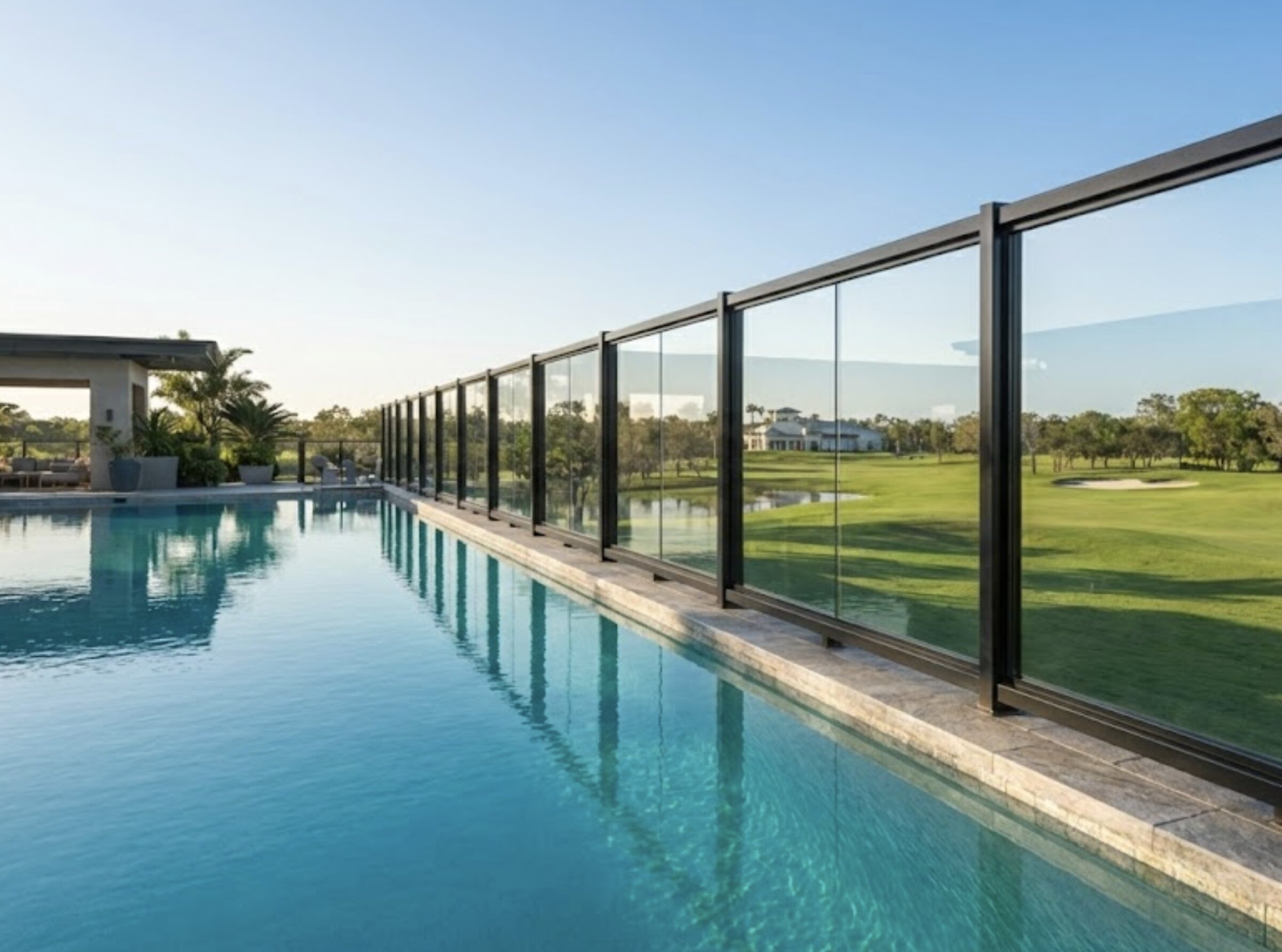
Removable mesh pool fencing and permanent glass pool fencing are the two most popular dedicated pool barrier systems. Mesh offers an affordable, removable safety solution. Glass delivers a permanent, premium barrier that doubles as an architectural feature. Both meet pool barrier codes, but the differences in aesthetics, durability, and long-term value are significant.
For full glass pricing by system type, see the glass fencing cost guide.
Pros & Cons
Glass Pool Fence
- Crystal-clear swimmer supervision
- Non-climbable smooth surface
- Permanent architectural feature
- Complete wind protection around pool
- Increases property value 5-15%
- Does not degrade from pool chemicals or UV
- Higher cost ($200-$500/ft)
- Professional installation required
- Permanent — cannot be easily removed
- Shows splash marks and water spots
- Heavier — requires engineered footings
Mesh Pool Fence
- Removable and re-installable
- Lower cost ($15-$35/ft)
- Self-closing, self-latching gates available
- Allows airflow
- Lightweight
- Meets ASTM F2286 pool barrier standard
- Mesh obstructs views — monitoring swimmers through it is difficult at distance
- Fence posts create trip hazards in deck when removed
- Mesh degrades from UV (3-7 year replacement)
- Does not enhance property aesthetics
- Posts can loosen in deck sleeves over time
- No wind protection
- Looks temporary and residential
Feature-by-Feature Comparison
| Feature | Glass Pool Fence | Mesh Pool Fence |
|---|---|---|
| View Clarity for Supervision | Crystal clear at any distance | Partially obstructed by mesh weave |
| Climb Resistance | Non-climbable (smooth glass) | Difficult to climb (mesh gives way) |
| Removability | Permanent | Fully removable |
| Cost | $200-$500/ft | $15-$35/ft |
| Lifespan | 25-50+ years | 5-10 years |
| UV Durability | Unaffected | Mesh degrades and fades |
| Chemical Resistance | Excellent | Moderate (mesh weakens over time) |
| Aesthetic Value | Premium architectural feature | Functional/utilitarian |
| Wind Protection | Complete | None |
| Property Value Impact | +5-15% | Neutral |
| Gate Options | Self-closing hinged gates | Self-closing, self-latching mesh gates |
Best For: Which Should You Choose?
The Verdict
Mesh pool fencing is a practical, affordable safety barrier — ideal for rental properties, budget-conscious families, and temporary pool enclosures. Glass pool fencing is the permanent, premium solution that combines superior safety visibility, architectural beauty, wind protection, and property value enhancement. For homeowners building or renovating a pool they plan to enjoy for decades, glass fencing is the investment that pays dividends in safety, aesthetics, and resale value.
Frequently Asked Questions
Is glass or mesh pool fencing safer for children?
Both meet pool barrier code requirements, but glass has safety advantages. Glass provides completely unobstructed visibility for monitoring swimmers — critical for preventing drowning. Glass is also truly non-climbable. While mesh is difficult to climb, determined toddlers can sometimes grip the mesh fabric. The drowning prevention benefit of clear visibility cannot be overstated.
Do mesh pool fence posts damage the pool deck?
Mesh pool fences use deck-mounted sleeves (3/4" holes drilled into the deck) that hold the fence posts. When the fence is removed, these sleeves remain as permanent holes in the deck, typically covered with flush caps. Over time, water can infiltrate these holes and damage the concrete. Glass fence footings are designed as permanent, sealed installations.
How often does mesh pool fencing need replacement?
The mesh fabric degrades from UV exposure, pool chemical splash, and weather. Most manufacturers recommend mesh replacement every 3-7 years, at a cost of $5-$15 per linear foot. Posts and hardware may last 8-12 years. Over a 25-year period, you may spend as much on mesh replacements as a one-time glass installation.
Can I upgrade from mesh to glass pool fencing later?
Yes. Many homeowners start with mesh fencing for immediate code compliance and later upgrade to glass. The mesh fence sleeves in the deck can be filled and patched. Glass fence footings require new core-drilling into the deck. Plan the glass fence layout independently — do not attempt to reuse mesh fence post locations.
Does pool mesh fencing meet code everywhere?
Mesh pool fencing that meets ASTM F2286 is accepted in most US jurisdictions as a pool barrier. However, some municipalities have specific requirements about mesh density, post spacing, and gate hardware that not all mesh products meet. Check with your local building department. Glass pool fencing meets or exceeds all residential pool barrier code requirements nationwide.
Can wind blow over a mesh pool fence?
While mesh pool fences are anchored into deck sleeves, they are not engineered for high wind loads. Strong winds (40+ mph) can cause mesh panels to flex, lean, or even pull posts from loosened sleeves. Glass pool fencing with engineered base shoes or posts is designed to withstand specific wind loads — up to 180+ mph in hurricane-rated systems. For wind-prone areas, glass provides a far more reliable permanent barrier.
Does mesh pool fencing look good for home resale?
Mesh pool fencing is perceived as a utilitarian safety device, not an aesthetic feature. It does not enhance the pool area appearance and can actually make the space feel enclosed and institutional. Real estate agents generally recommend removing or upgrading mesh fencing before listing a home. Glass pool fencing is consistently cited as a selling feature that enhances pool area appeal and contributes to higher offers.
How much does mesh pool fence maintenance cost over time?
Mesh fabric replacement costs $5-$15 per linear foot every 3-7 years. Post hardware and sleeve maintenance adds $200-$500 over the fence lifetime. For an 80-foot pool perimeter over 25 years, total mesh costs (initial + replacements) can reach $4,000-$10,000. A glass pool fence costs $16,000-$40,000 initially but requires less than $500 in maintenance over the same period, with far superior aesthetics and safety performance.
More Comparisons
Back to Glass Fencing Guide | Cost Guide | How-To Guides | Solutions | Glossary