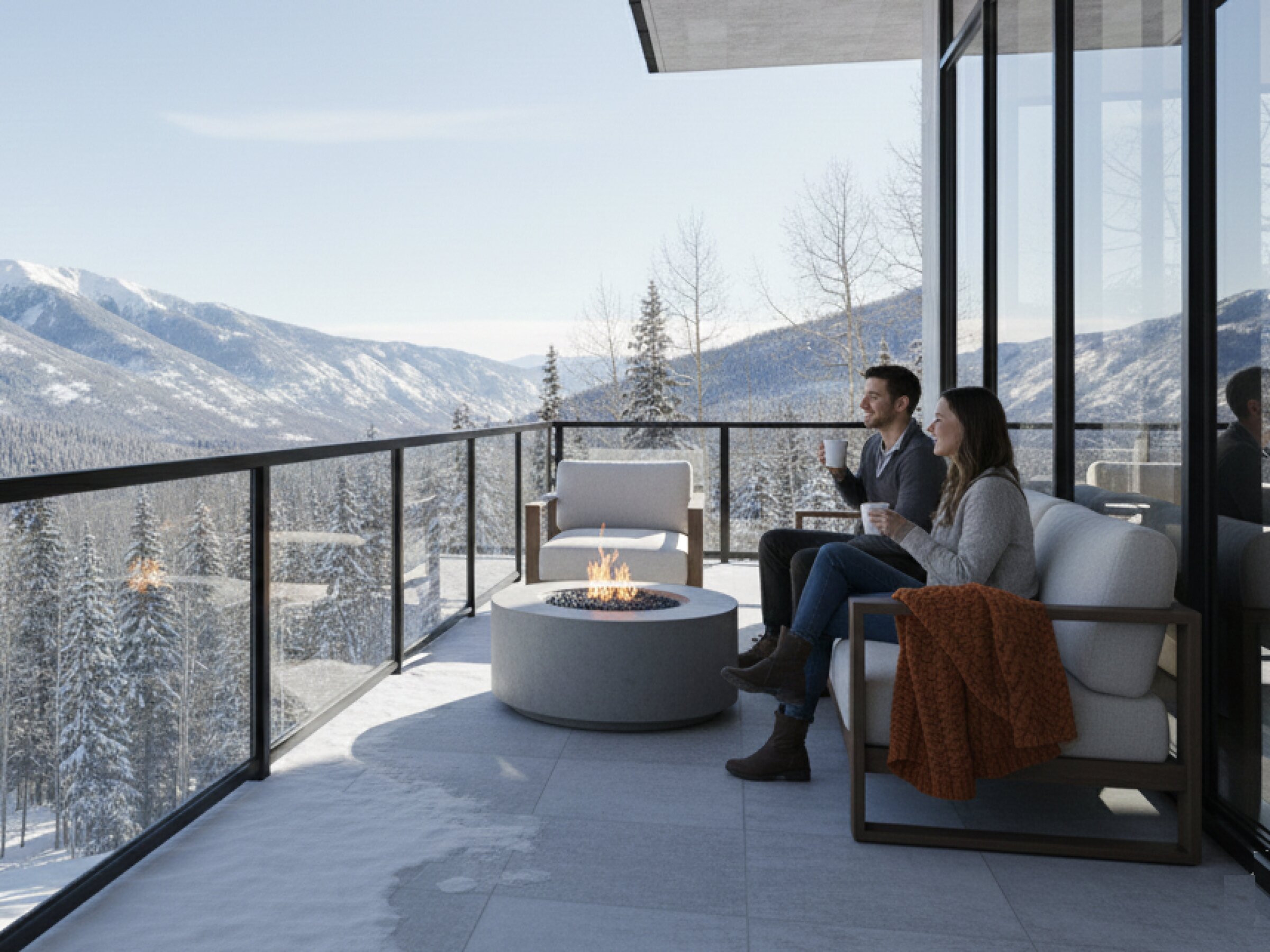
Cold-Climate Engineering
Design for Anchorage means designing for deep cold as a materials problem: gaskets, setting blocks and structural sealants specified for temperatures far below zero, heavy snow loads, and the meltwater-refreeze cycle at base shoes and drainage paths. A system that performs in the Lower 48 on the same drawings is not automatically an Anchorage system; the hardware and sealant schedule is where the difference lives.
Recommended Systems for Anchorage
Extreme cold requires specialized engineering: 316 stainless steel hardware rated to -40°F, EPDM gaskets that maintain flexibility at extreme cold, drainage provisions that prevent ice buildup and frost heaving, and de-icing salt resistant finishes. INFINITYGLASS cold-climate specifications address snow accumulation at base shoes and thermal contraction stress on mounting points.
Boundless Frameless Railing
Engineered for Anchorage conditions with site-specific calculations and local code compliance.
Learn more →Framed Post Railing
Engineered for Anchorage conditions with site-specific calculations and local code compliance.
Learn more →High-Wall Enclosure System
Engineered for Anchorage conditions with site-specific calculations and local code compliance.
Learn more →INFINITYFLEX Modular Partition
Engineered for Anchorage conditions with site-specific calculations and local code compliance.
Learn more →Popular Projects in Anchorage
Building Codes & Regulations
Anchorage is its own building-code jurisdiction, permitting through the Municipality of Anchorage Development Services Department under Anchorage Municipal Code Title 23. The edition matters right now: the Assembly approved AO 2026-33 in April 2026, updating Title 23 from the 2018 to the 2024 International Building Code with municipal amendments, effective May 18, 2026. Guards follow IBC Section 1015 at 42 inches minimum for most occupancies, guard glazing follows IBC Section 2407 with CPSC 16 CFR Part 1201 Category II or ANSI Z97.1 Class A, and the governing structural conversation in Anchorage is seismic rather than wind: the municipality sits in one of the highest seismic design categories in the country, and the 2018 magnitude 7.1 earthquake struck the city directly. Anchor selection, connection ductility and attachment detailing carry the engineering weight here.
INFINITYGLASS™ provides PE-stamped engineering drawings for permit submittal in Anchorage and all Alaska jurisdictions.
Frequently Asked Questions: Glass Fencing in Anchorage
What building code applies to glass railings in Anchorage?
Anchorage Municipal Code Title 23, updated by AO 2026-33 to the 2024 International Building Code with municipal amendments, effective May 18, 2026, administered by Development Services.
Did Anchorage's building code just change?
Yes. Title 23 moved from the 2018 to the 2024 IBC effective May 18, 2026, so current projects are reviewed against the 2024 edition. Projects designed under the 2018 cycle should confirm which edition their review is held to.
How does seismic design affect a glass railing in Anchorage?
Seismic governs over wind on most Anchorage work. Anchorage, connection ductility and the attachment detail are engineered to the project's seismic design category with project-specific calculations.
How tall must a glass guard be in Anchorage?
At least 42 inches from the walking surface per IBC Section 1015 for most commercial occupancies.
Does extreme cold affect a glass railing system?
It affects everything around the glass: gaskets, sealants and setting materials must be rated for deep-cold service, and base details must handle meltwater refreeze. Cold-climate hardware selection is a core part of the specification.
Do you provide stamped engineering for Anchorage permits?
Yes. Project-specific PE-stamped calculations are prepared for the applicable IBC load cases including the governing seismic demands.