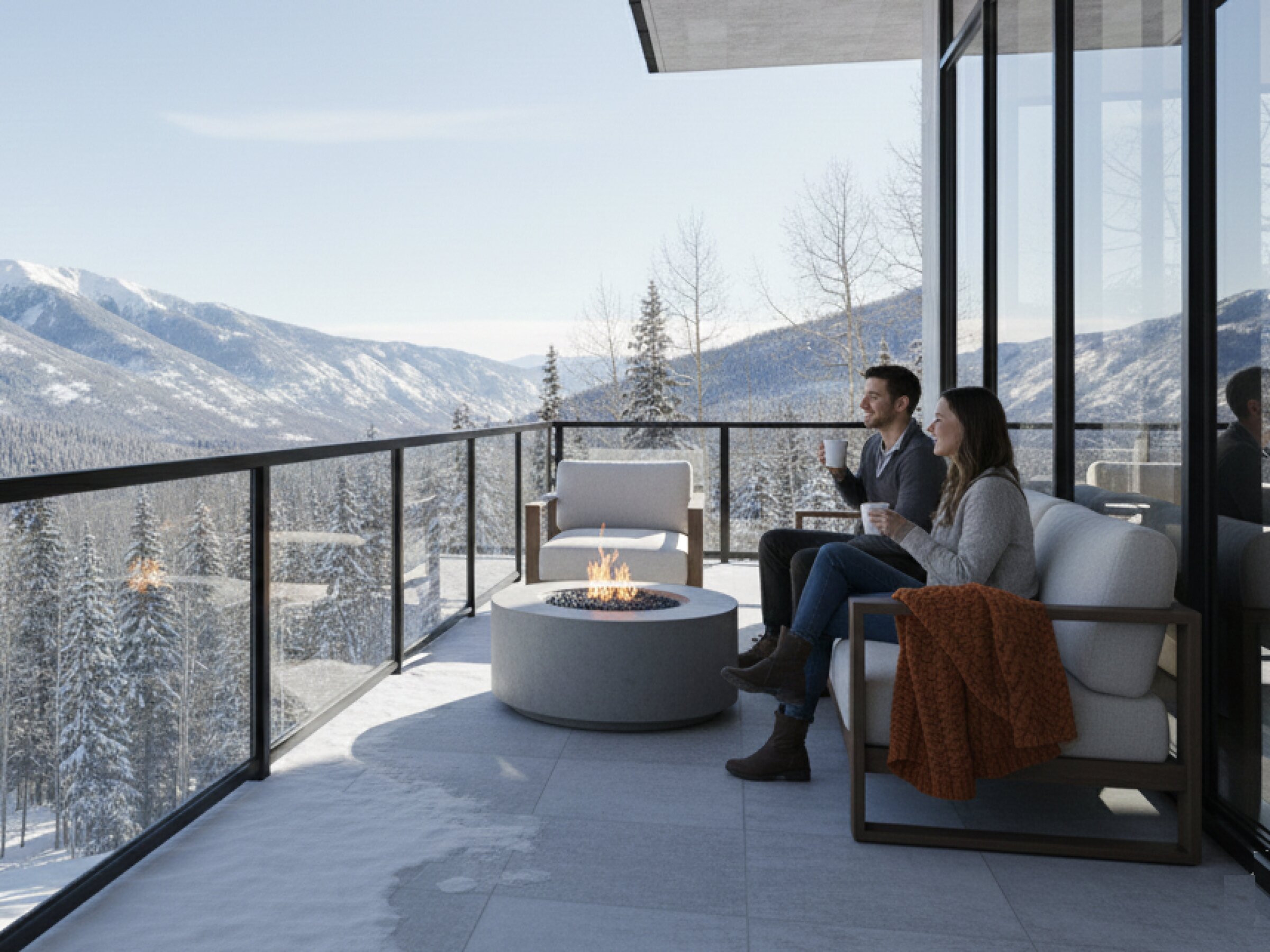
High-Altitude Engineering
Denver's climate is defined by altitude: 300 days of high-UV sun, one of the most hail-active corridors in the country, big freeze-thaw swings (a 60 F winter afternoon can follow a 5 F night), and Chinook downslope winds. The engineering response: tempered laminated panels resist impact and hold together if a lite ever breaks, mounting details drain so freeze-thaw cycles cannot stress hardware or concrete, design wind speeds of roughly 105 to 115 mph (3-second gust, ASCE 7-16, Risk Category II) rise on exposed and elevated sites, and UV-stable finishes handle mile-high sun that fades and embrittles lesser materials. Low-iron glass keeps Front Range views color-true, and an easy-clean coating (our EnduroShield treatment reduces cleaning effort by about 90 percent) shrugs off spring hail-season grime.
Recommended Systems for Denver
Mountain installations face elevated UV intensity (25-40% higher than sea level), extreme temperature swings, heavy snow loads, and in some locations seismic activity. INFINITYGLASS alpine specifications include UV-stabilized sealants, freeze-resistant anchoring, and snow-shedding base shoe designs that prevent ice accumulation.
Boundless Frameless Railing
Engineered for Denver conditions with site-specific calculations and local code compliance.
Learn more →Framed Post Railing
Engineered for Denver conditions with site-specific calculations and local code compliance.
Learn more →High-Wall Enclosure System
Engineered for Denver conditions with site-specific calculations and local code compliance.
Learn more →INFINITYFLEX Modular Partition
Engineered for Denver conditions with site-specific calculations and local code compliance.
Learn more →Popular Projects in Denver
Building Codes & Regulations
Denver permits through Community Planning and Development under the 2025 Denver Building and Fire Code, which is based on the 2024 International Building Code with Denver amendments, adopted June 13, 2025; the transition window has closed, so all new permits file under the 2025 code. Glass used in a guard must be laminated tempered or laminated heat-strengthened glass with a factor of safety of four (IBC Section 2407 as amended by Denver), certified to CPSC 16 CFR 1201 Category II or ANSI Z97.1 Class A, and guards must resist the code's 50 lb per linear foot and 200 lb concentrated loads. Residential pool barriers require a minimum 48-inch height with self-closing, self-latching gates under the adopted residential provisions. The Front Range design case is hail, snow, freeze-thaw, and downslope wind: design wind speeds run roughly 105 to 115 mph (3-second gust, ASCE 7-16, Risk Category II), with exposed and elevated sites engineered for their actual exposure, and Denver's mile-high UV is among the strongest of any major US metro. Seismic loading is low.
INFINITYGLASS™ provides PE-stamped engineering drawings for permit submittal in Denver and all Colorado jurisdictions. Colorado Building Codes Guide →
Frequently Asked Questions: Glass Fencing in Denver
What building code applies to glass railings in Denver?
The 2025 Denver Building and Fire Code applies, based on the 2024 International Building Code with Denver amendments and administered by Community Planning and Development. We provide PE-stamped drawings for submittal.
Can a glass fence survive Denver hail?
Panels are tempered and laminated: tempering resists impact and lamination holds a panel together if a lite ever breaks, so the barrier stays intact until the panel is swapped. Individual panels replace without rebuilding the fence, which is the practical answer to hail country.
How do freeze-thaw cycles affect a glass railing?
The glass is unaffected; the risk is trapped water freezing at connections. Our mounting details are designed to drain, and hardware is specified for Denver's swing from 5 F nights to 60 F afternoons.
Does Denver's altitude UV damage glass fencing?
Glass itself is immune to UV. Mile-high sun is a hardware and finish question, so we specify UV-stable finishes and stainless hardware that do not fade or embrittle the way coated or organic materials can.
How tall does a pool fence need to be in Denver?
Residential pool barriers require a minimum 48-inch height with self-closing, self-latching gates under the adopted residential provisions. Frameless glass meets the requirement while keeping the yard and mountain view open.
Does INFINITYGLASS serve the Front Range beyond Denver?
Yes. We ship factory-direct along the Front Range, from Boulder to Colorado Springs and into the mountain communities, with PE-stamped engineering matched to each site's exposure.