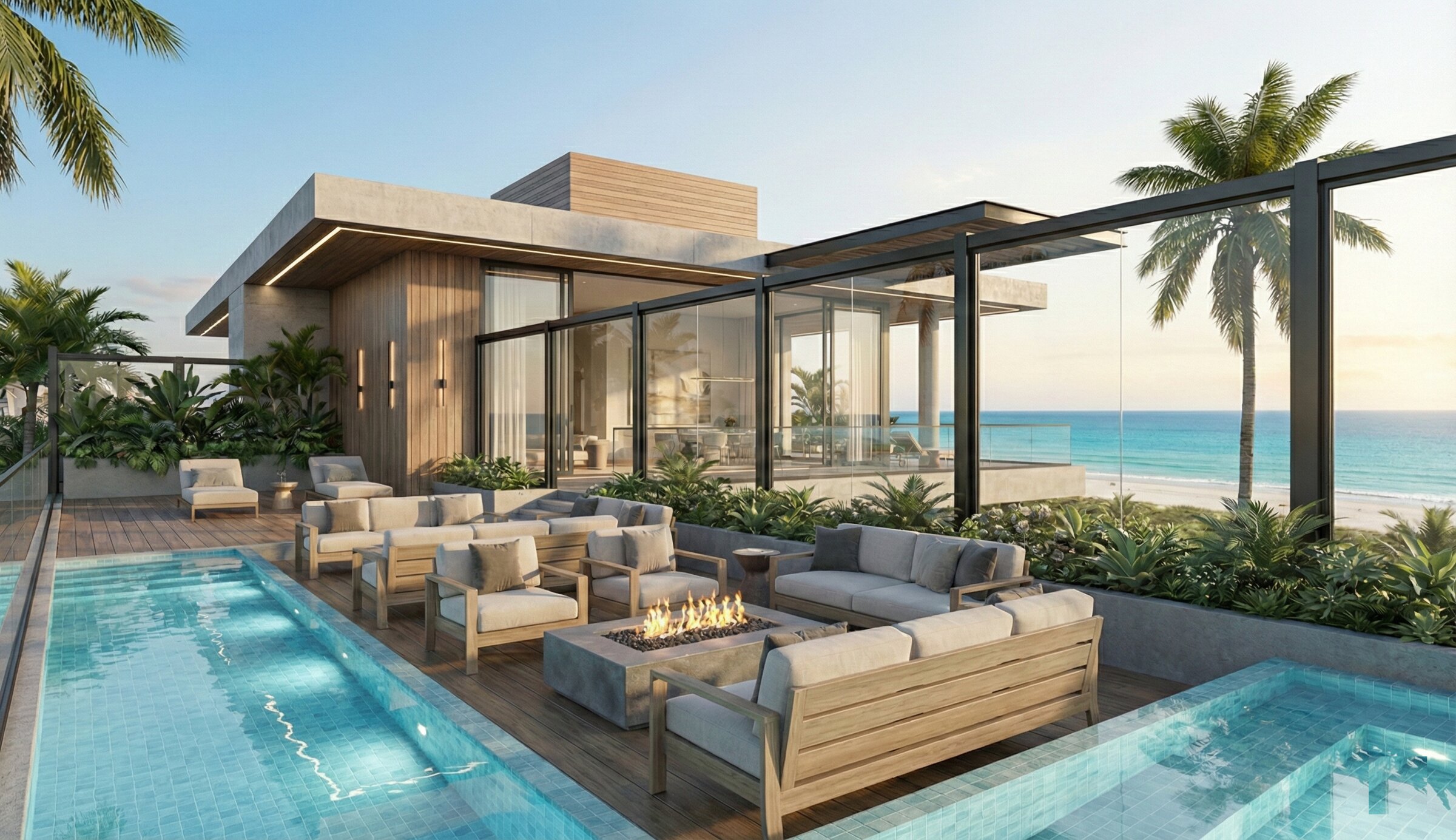
Coastal Corrosion Protection
Direct marine exposure means chloride-laden air acting continuously on every metal component, so 316 stainless and marine-grade finishes are a baseline rather than an upgrade. Santa Ana wind events add episodic high pressure from the inland direction, the opposite of the prevailing onshore condition, so guards on exposed terraces see load reversals.
Recommended Systems for Malibu
Salt air exposure at this coastal location requires marine-grade materials throughout every glass installation. INFINITYGLASS specifies 316 stainless steel hardware, marine-grade anodized aluminum channels, and UV-resistant sealants that withstand constant salt spray without degradation. All finishes are rated for coastal exposure.
Boundless Frameless Railing
Engineered for Malibu conditions with site-specific calculations and local code compliance.
Learn more →Framed Post Railing
Engineered for Malibu conditions with site-specific calculations and local code compliance.
Learn more →High-Wall Enclosure System
Engineered for Malibu conditions with site-specific calculations and local code compliance.
Learn more →Popular Projects in Malibu
Building Codes & Regulations
Malibu is the most permitting-intensive market on this list, for two independent reasons. First, the entire city is designated a Very High Fire Hazard Severity Zone within a State Responsibility Area, which makes California Building Code Chapter 7A compliance mandatory on new construction, major additions and substantial rebuilds. Chapter 7A drives Class A roofing, ignition-resistant exterior materials, ember-resistant vents at 1/8 inch mesh or finer, non-combustible eave treatment and tempered glazing, and it imposes fire-rated glazing requirements on openings within 100 feet of a property line facing a hazard zone. Second, Malibu sits inside California Coastal Commission jurisdiction and is governed by the Malibu Local Coastal Program, so many projects need a Coastal Development Permit from the City and, for many sites, from the Commission itself before a building permit can even be applied for. Reported plan-review timelines run roughly 4 to 6 weeks for Chapter 7A review and 6 to 12 weeks for a coastal permit, which can add several months against an equivalent inland project. Underneath both layers, guards follow the 2025 California Building Code at 42 inches minimum with guard glazing per CBC Section 2407.
INFINITYGLASS™ provides PE-stamped engineering drawings for permit submittal in Malibu and all California jurisdictions. California Building Codes Guide →
Frequently Asked Questions: Glass Fencing in Malibu
What code applies to glass railings in Malibu?
The 2025 California Building Code with Los Angeles County administration, plus mandatory Chapter 7A wildfire provisions because the entire city is a Very High Fire Hazard Severity Zone.
Do I need a Coastal Development Permit?
Many Malibu projects do, from the City under the Malibu Local Coastal Program and in many cases from the California Coastal Commission as well, before a building permit can be applied for.
Are glass railings allowed in a Very High Fire Hazard Severity Zone?
Yes, and tempered or laminated glass is non-combustible, which is an advantage over combustible guard materials in an ember-exposure environment. Specific fire-rated glazing requirements apply to openings within 100 feet of a property line facing a hazard zone.
How long does Malibu permitting take?
Reported ranges are roughly 4 to 6 weeks for Chapter 7A plan check and 6 to 12 weeks for a coastal permit, so plan for several months more than an inland equivalent.
What hardware survives Malibu's salt air?
316 stainless and marine-grade finishes. Lower stainless grades show corrosion quickly under continuous chloride exposure.
Does a Malibu glass railing need to handle Santa Ana winds?
Yes, and it changes the analysis, because Santa Ana events load a terrace edge from the inland direction rather than off the water, producing pressure reversals that need to be designed for.