Coastal Corrosion Protection
Los Angeles weather is famously gentle (roughly 50 F to 85 F most of the year), so the design drivers are sun, views, seismic, and fire rather than storms: 280-plus sunny days argue for low-iron glass to keep canyon and ocean views color-true, intense UV favors UV-stable hardware finishes, and coastal strips from Santa Monica to Palos Verdes favor 316-grade stainless hardware against marine air. Baseline design wind speeds run roughly 92 to 96 mph (3-second gust, ASCE 7-16, Risk Category II), with exposed hillside and rooftop sites engineered for their actual exposure, including localized Santa Ana wind exposure in the canyons. Seismic loading, not wind, governs the connection engineering, and in the city's expanding fire-hardening zones a noncombustible glass and stainless assembly is a practical perimeter choice.
Recommended Systems for Los Angeles
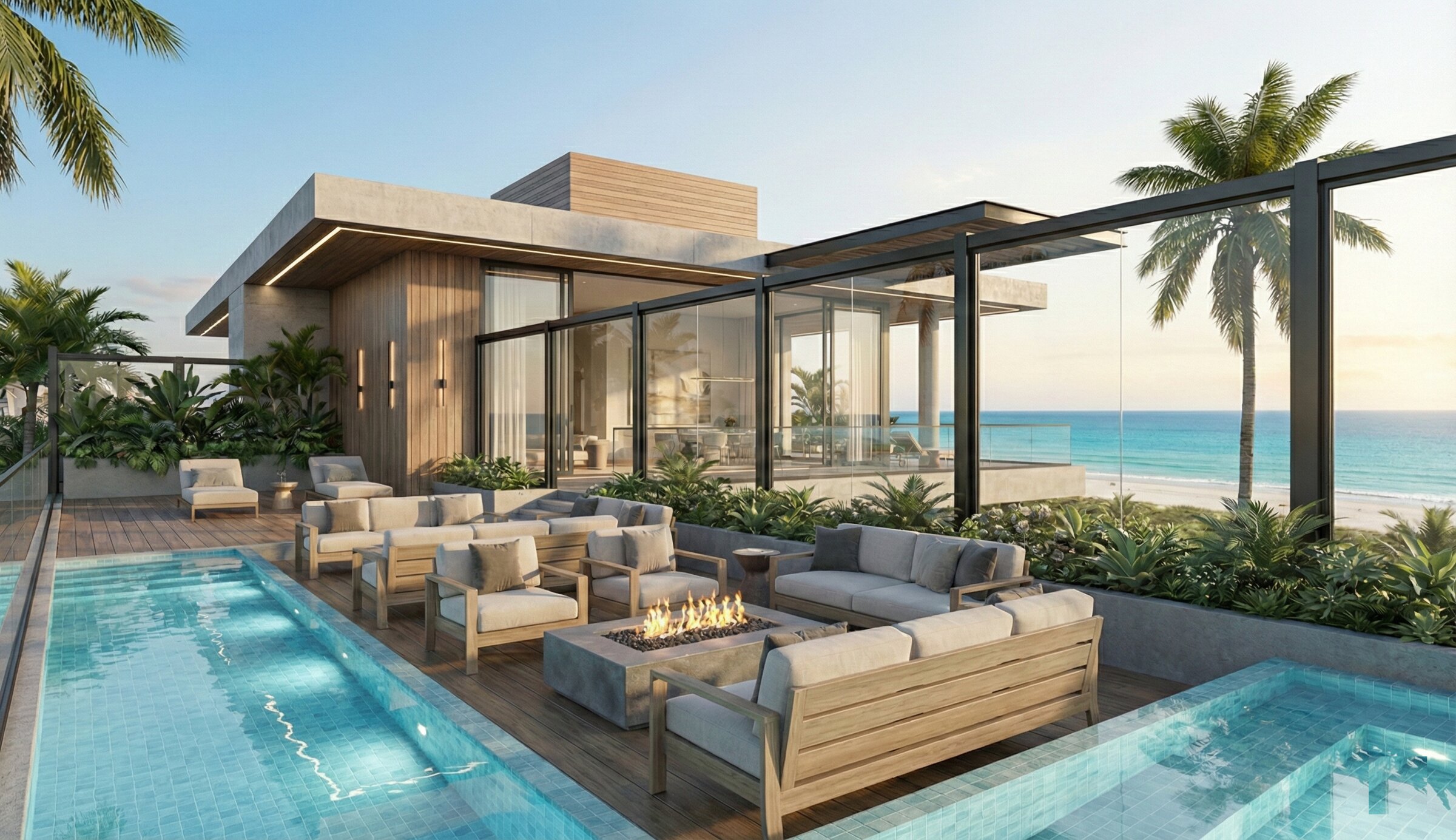
Salt air exposure at this coastal location requires marine-grade materials throughout every glass installation. INFINITYGLASS specifies 316 stainless steel hardware, marine-grade anodized aluminum channels, and UV-resistant sealants that withstand constant salt spray without degradation. All finishes are rated for coastal exposure.
Boundless Frameless Railing
Engineered for Los Angeles conditions with site-specific calculations and local code compliance.
Learn more →Framed Post Railing
Engineered for Los Angeles conditions with site-specific calculations and local code compliance.
Learn more →High-Wall Enclosure System
Engineered for Los Angeles conditions with site-specific calculations and local code compliance.
Learn more →Popular Projects in Los Angeles
Building Codes & Regulations
Los Angeles permits through the Los Angeles Department of Building and Safety (LADBS) under the Los Angeles Building Code, which adopts the 2025 California Building Code (Title 24 Part 2, based on the 2024 IBC) with the city's more restrictive local amendments, operative January 1, 2026; projects permitted earlier are vested under the prior edition. Glass used in a guard must be laminated tempered or laminated heat-strengthened glass with a factor of safety of four (CBC Section 2407), certified to CPSC 16 CFR 1201 Category II or ANSI Z97.1 Class A, and guards must resist the code's 50 lb per linear foot and 200 lb concentrated loads. California's Swimming Pool Safety Act (Health and Safety Code Section 115923) requires residential pool enclosures at least 60 inches high with self-closing, self-latching gates that open away from the water, no more than a 2-inch bottom gap, no openings that pass a 4-inch sphere, and no climbable handholds or footholds; a smooth glass panel meets the no-foothold requirement by design. Los Angeles is a very high seismic region, so seismic drift governs connection design, and the 2025 code cycle extends wildland-urban-interface hardening requirements to more of the city's High Fire Hazard Severity Zones, which matters for hillside lots; glass is noncombustible, and our PE-stamped drawings carry California-specific structural calculations.
INFINITYGLASS™ provides PE-stamped engineering drawings for permit submittal in Los Angeles and all California jurisdictions. California Building Codes Guide →
Frequently Asked Questions: Glass Fencing in Los Angeles
What building code applies to a Los Angeles glass railing project?
The Los Angeles Building Code applies, which adopts the 2025 California Building Code (2024 IBC-based) with the city's own amendments, operative January 1, 2026, permitted through the Los Angeles Department of Building and Safety. We provide PE-stamped drawings for LADBS submittal.
How tall does a pool fence need to be in Los Angeles?
California requires residential pool enclosures to be at least 60 inches high (Health and Safety Code Section 115923), with self-closing, self-latching gates that open away from the water and no climbable handholds or footholds. A smooth glass panel meets the no-climb requirement by design.
Do Los Angeles installations need seismic engineering?
Yes. Los Angeles is a very high seismic region, so guard connections are engineered for seismic drift and dynamic loading. Every installation ships with California-specific PE-stamped structural calculations.
Is glass fencing appropriate in LA's fire hazard zones?
Glass and stainless steel are noncombustible, which fits the direction of California's expanding wildland-urban-interface hardening rules for hillside and High Fire Hazard Severity Zone properties. Site-specific requirements still apply, and we support the documentation.
Can glass railings handle Santa Ana winds on a hillside lot?
Yes. Exposed hillside and canyon sites are engineered for their actual exposure category above the roughly 92 to 96 mph regional baseline (3-second gust, ASCE 7-16, Risk Category II), and laminated panels are specified to the calculated load.
Does INFINITYGLASS serve the whole LA metro?
Yes. We ship factory-direct from the beach cities through the Valley to the foothill suburbs, with PE-stamped engineering and submittal-ready documentation on every order.