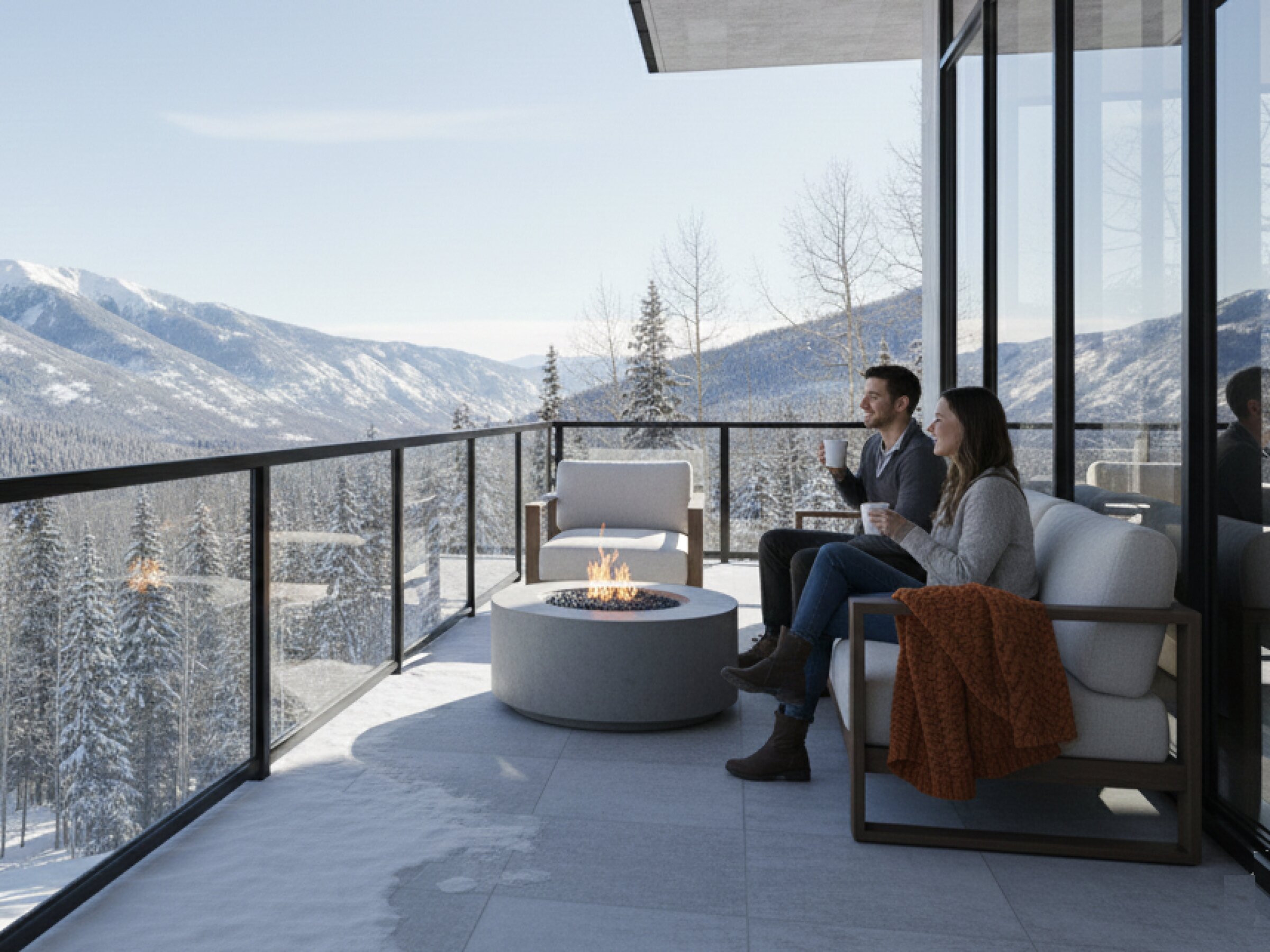
High-Altitude Engineering
Stowe is an alpine snow market: heavy ground snow load, shed and drifted snow onto decks and terraces, hard freeze-thaw and meltwater refreeze at base details. Snow surcharge on guards and wind screens below roof edges is the load case that surprises out-of-state specifications. Corrosion pressure is low; water management and cold-rated sealants are the durability work.
Recommended Systems for Stowe
Mountain installations face elevated UV intensity (25-40% higher than sea level), extreme temperature swings, heavy snow loads, and in some locations seismic activity. INFINITYGLASS alpine specifications include UV-stabilized sealants, freeze-resistant anchoring, and snow-shedding base shoe designs that prevent ice accumulation.
Boundless Frameless Railing
Engineered for Stowe conditions with site-specific calculations and local code compliance.
Learn more →Framed Post Railing
Engineered for Stowe conditions with site-specific calculations and local code compliance.
Learn more →High-Wall Enclosure System
Engineered for Stowe conditions with site-specific calculations and local code compliance.
Learn more →Popular Projects in Stowe
Building Codes & Regulations
Vermont runs building permitting differently from most states: commercial and public-building construction permits go through the state Division of Fire Safety under the Vermont Fire and Building Safety Code, with the current 2025 edition adopting the 2021 International Building Code alongside the 2021 NFPA 101 Life Safety Code and NFPA 1 Fire Code, while the Town of Stowe handles local zoning and land-use review. Guards follow IBC Section 1015 at 42 inches minimum for most occupancies, guard glazing follows IBC Section 2407 meeting CPSC 16 CFR Part 1201 Category II or ANSI Z97.1 Class A, and the NFPA 101 overlay means egress-path edges get a second layer of review that pure-IBC states do not apply.
INFINITYGLASS™ provides PE-stamped engineering drawings for permit submittal in Stowe and all Vermont jurisdictions.
Frequently Asked Questions: Glass Fencing in Stowe
What building code applies to glass railings in Stowe?
The Vermont Fire and Building Safety Code, 2025 edition, which adopts the 2021 IBC and the 2021 NFPA 101 and NFPA 1, administered for commercial work by the state Division of Fire Safety, with local zoning through the Town of Stowe.
Who issues the permit, the town or the state?
Commercial building permits run through the Vermont Division of Fire Safety; the town handles zoning and land-use review. Plan for both tracks.
How tall must a glass guard be in Stowe?
At least 42 inches from the walking surface per IBC Section 1015 for most occupancies.
What glass is required in a guard?
Laminated glass constructed of fully tempered or heat-strengthened glass meeting IBC Section 2407 and either CPSC 16 CFR Part 1201 Category II or ANSI Z97.1 Class A.
How does alpine snow affect railing design?
Decks and terraces receive shed and drifted snow, so guards and wind screens are engineered for snow surcharge in addition to occupant and wind loads, with base details that survive meltwater refreeze.
Do you provide stamped engineering for Vermont permits?
Yes. Project-specific PE-stamped calculations are prepared for the applicable IBC load cases including alpine snow demands.