Cold-Climate Engineering
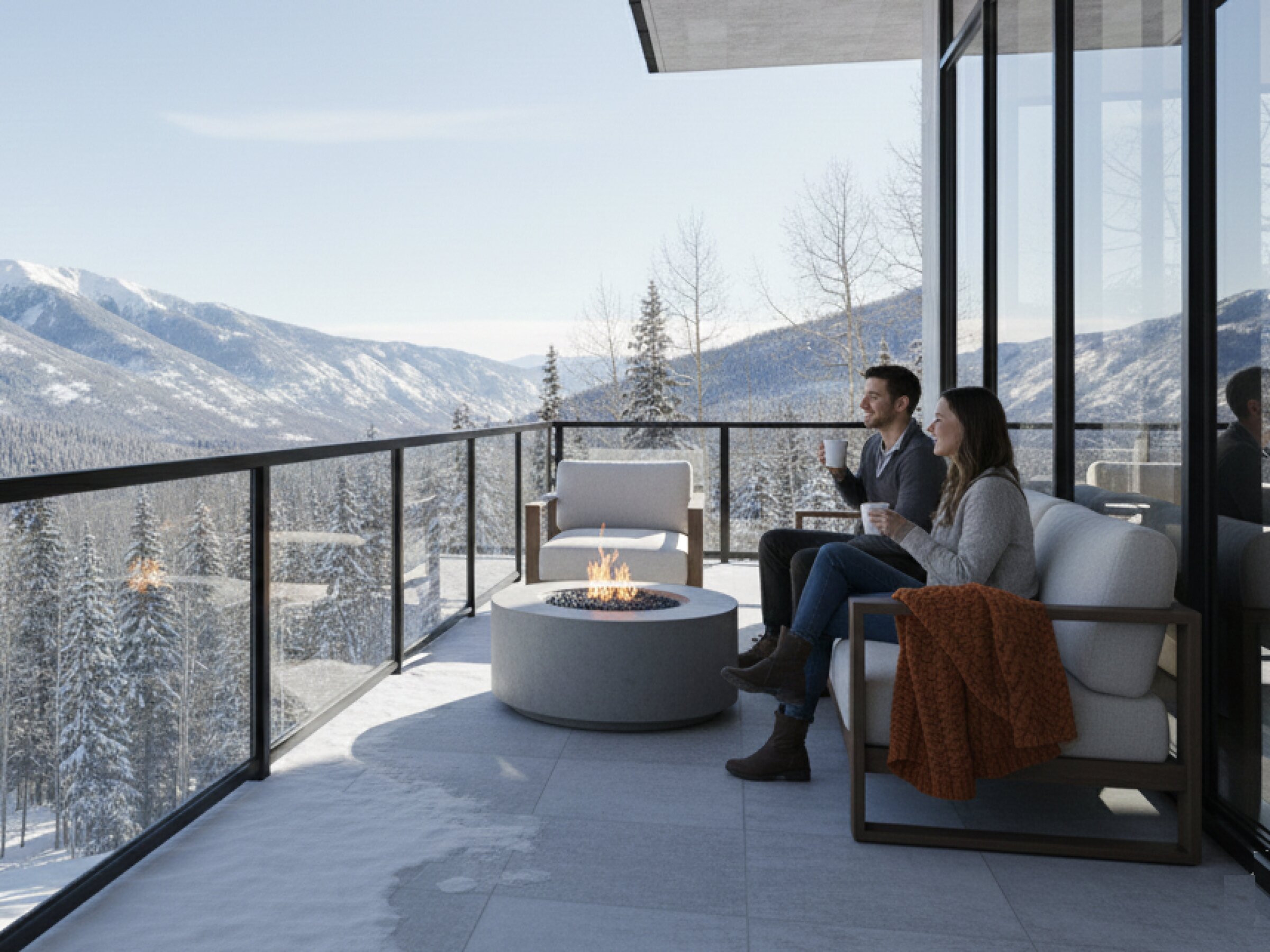
Boston runs roughly 10 F to 90 F with humid summers, snow-loaded winters, salt air off the harbor, and nor'easters that make wind the defining load: design wind speeds of roughly 120 to 130 mph (3-second gust, ASCE 7-16, Risk Category II) rise further on exposed waterfront and rooftop sites. The engineering response is drainage-first detailing so freeze-thaw cycles cannot stress connections, 316-grade stainless hardware against harbor salt and winter de-icing, and laminated panels specified to the site's actual exposure. Tempered laminated glass is unaffected by cold and doubles as a wind screen: on a Seaport roof deck it keeps the skyline and harbor view while cutting the wind that would otherwise idle the space for half the year.
Recommended Systems for Boston
Extreme cold requires specialized engineering: 316 stainless steel hardware rated to -40°F, EPDM gaskets that maintain flexibility at extreme cold, drainage provisions that prevent ice buildup and frost heaving, and de-icing salt resistant finishes. INFINITYGLASS cold-climate specifications address snow accumulation at base shoes and thermal contraction stress on mounting points.
Boundless Frameless Railing
Engineered for Boston conditions with site-specific calculations and local code compliance.
Learn more →Framed Post Railing
Engineered for Boston conditions with site-specific calculations and local code compliance.
Learn more →High-Wall Enclosure System
Engineered for Boston conditions with site-specific calculations and local code compliance.
Learn more →INFINITYFLEX Modular Partition
Engineered for Boston conditions with site-specific calculations and local code compliance.
Learn more →Popular Projects in Boston
Building Codes & Regulations
Boston permits through the city's Inspectional Services Department under the Massachusetts State Building Code, 780 CMR 10th Edition, which is based on the 2021 ICC codes with Massachusetts amendments; it took effect October 11, 2024 and has been the sole enforceable code for permits filed after June 30, 2025. Glass used in a guard must be laminated tempered or laminated heat-strengthened glass with a factor of safety of four (IBC Section 2407 as carried into 780 CMR), certified to CPSC 16 CFR 1201 Category II or ANSI Z97.1 Class A, and guards must resist the code's 50 lb per linear foot and 200 lb concentrated loads. Residential pool barriers require a minimum 48-inch height with self-closing, self-latching gates and no openings that pass a 4-inch sphere under the adopted residential provisions. Coastal New England wind governs more than most inland markets: design wind speeds run roughly 120 to 130 mph (3-second gust, ASCE 7-16, Risk Category II) with nor'easter exposure, rising on waterfront and rooftop sites; seismic loading is low but not zero in Massachusetts and is carried in the calculations. Landmark and historic-district projects add Boston Landmarks Commission review, where low-profile frameless glass typically presents well.
INFINITYGLASS™ provides PE-stamped engineering drawings for permit submittal in Boston and all Massachusetts jurisdictions.
| Item | Requirement |
|---|---|
| Permitting authority | City of Boston Inspectional Services Department (ISD), Building Division. Commercial work generally files a Long-Form Permit |
| Governing code | 780 CMR, Massachusetts State Building Code, Tenth Edition, based on the 2021 IBC, effective 2024-10-11. Ninth Edition concurrency ended 2025-06-30 |
| Guard loads | IBC 1607.9 as amended by 780 CMR: 50 lb per linear foot, 200 lb concentrated, 50 lb on infill |
| Guard glazing | Laminated fully tempered or heat-strengthened, CPSC 16 CFR 1201 Category II or ANSI Z97.1 Class A, 1/4 in minimum nominal, safety factor of four |
| Wind, Risk Category II | 120 mph, read from 780 CMR Table 1604.11, row "Boston". Risk Category I 110, III 128, IV 133 |
| How wind is determined | 780 CMR 1609.3 replaces the IBC first paragraph: basic wind speed comes from Table 1604.11, not from the ASCE 7 maps. Code references ASCE 7-16 |
| Seismic | Ss 0.270 g, S1 0.065 g (780 CMR Table 1604.11). 780 CMR 1613.1 states Seismic Design Category A shall not be used in the Commonwealth; anything otherwise qualifying for A is assigned B |
| Ground snow | Pg 40 psf; minimum flat roof snow load Pf 30 psf (780 CMR Table 1604.11) |
| Snow adjustment | Increase Pg by 0.021 times (site elevation minus mean elevation) where the site is higher |
| Flood | 780 CMR 1612.2 pulls flood-zone design into ASCE 24, including coastal high hazard and Coastal A zones |
| Pool barrier | 48 in minimum above finished grade on the side facing away from the pool, 2 in maximum ground clearance, self-closing self-latching gates opening outward, under the 2021 ISPSC as amended |
| Step | Detail |
|---|---|
| Historic | Boston Landmarks Commission, plus separate district commissions such as the Beacon Hill Architectural Commission, which publishes its own architectural guidelines |
| Hearing schedule | Landmarks design review hearings are the fourth Tuesday monthly, with complete applications due 15 business days before the hearing |
| Zoning overlay | Coastal Flood Resilience Overlay District, Boston Zoning Code Article 25A |
| Energy | Boston adopted the DOER Municipal Opt-In Specialized Stretch Energy Code on 2023-04-05, effective for new construction from 2024-01-01. Regulations at 225 CMR 22.00 and 225 CMR 23.00, amending IECC 2021 and ASHRAE 90.1-2019, with 2025 amendments effective 2025-02-14 |
Massachusetts writes your wind speed into the code, and it will not let you use Category A for seismic
Two things make Boston structurally distinct and both are state amendments rather than model-code behaviour.
First, you do not look up Boston's wind speed in ASCE 7. 780 CMR Section 1609.3 replaces the IBC's first paragraph and directs the designer to 780 CMR Table 1604.11, a tabulated list by municipality. For Boston, Risk Category II is 120 mph, with Risk Category I at 110, III at 128 and IV at 133. These are ultimate three-second-gust values. Table 1604.11 also carries the note that local conditions may produce higher speeds than tabulated, so a Special Wind Region judgement remains available, but the starting point is the table and not the map.
Second, Massachusetts will not permit Seismic Design Category A. 780 CMR Section 1613.1 states plainly that SDC A shall not be used in the Commonwealth, and any structure that would otherwise qualify is assigned Category B. Boston's mapped accelerations are modest at Ss 0.270 g and S1 0.065 g, which in most states would end the seismic conversation. Here it does not. There is a floor, and glass guard anchorage is detailed to it.
Third, and specific to enclosures and glass roofs rather than guards: Boston's ground snow load is 40 psf with a 30 psf minimum flat roof load, and 780 CMR amends the drift provisions extensively, covering multiple-level roofs, very high roof separations, and sliding snow with a windward drift surcharge at the separating wall. On a glass enclosure below an adjacent higher roof, the drift surcharge is usually the governing case, not the uniform load.
Boston submarkets we serve
The Seaport and Fort Point Channel for new-build terraces and amenity decks. Back Bay for hospitality and retail. Beacon Hill, where the Architectural Commission publishes its own guidelines and landmark friction is highest. The South Boston Waterfront, where the Coastal Flood Resilience Overlay applies. Fenway and Longwood for institutional and medical campus work.
Frequently Asked Questions: Glass Fencing in Boston
What building code applies to glass railings in Boston?
The Massachusetts State Building Code, 780 CMR 10th Edition (based on the 2021 ICC codes with Massachusetts amendments), applies statewide and is administered in Boston by the Inspectional Services Department. We provide PE-stamped drawings for submittal.
How much wind must a Boston roof deck railing handle?
Design wind speeds run roughly 120 to 130 mph (3-second gust, ASCE 7-16, Risk Category II) with nor'easter exposure, and waterfront and rooftop sites are engineered for their actual exposure category. A glass wind screen often makes a harbor-facing deck usable while keeping the view.
Can a glass railing survive a Boston winter?
Yes. Tempered laminated glass is unaffected by cold and snow; the engineering focus is drainage detailing so water cannot pool and freeze at connections, plus 316-grade stainless hardware against harbor salt and de-icing exposure.
Will frameless glass pass historic review in Back Bay or Beacon Hill?
Frameless glass typically presents well at Boston Landmarks Commission and neighborhood historic-district review because its low visual profile preserves the roofline reading from the street. We supply drawings and specifications formatted for the review.
How tall does a pool fence need to be in Massachusetts?
Residential pool barriers require a minimum 48-inch height with self-closing, self-latching gates and no openings that pass a 4-inch sphere under the adopted provisions of 780 CMR. Frameless glass meets the requirement while keeping the yard visually open.
Does INFINITYGLASS serve the wider Boston metro?
Yes. We ship factory-direct throughout Greater Boston, from Cambridge and Somerville to the North and South Shores, with PE-stamped engineering prepared to the statewide code.