Four-Season Performance
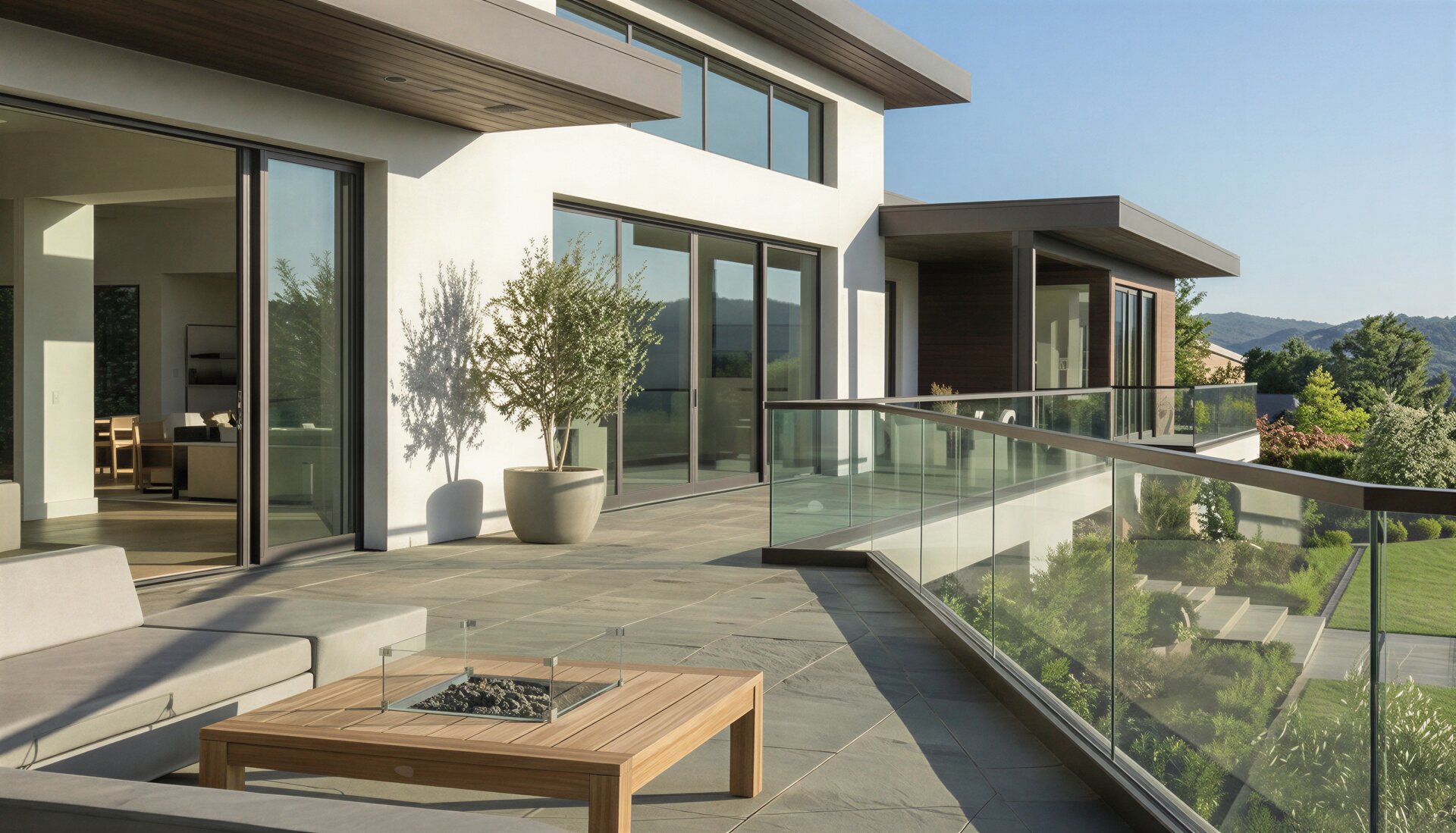
Washington's four-season climate runs roughly 20 F to 95 F with humid summers, pollen-heavy springs, and occasional winter ice, so the engineering priorities are freeze-thaw drainage detailing and UV-stable finishes. Low-iron glass keeps rooftop views crisp in summer haze, an easy-clean coating helps in pollen season (our EnduroShield treatment reduces cleaning effort by about 90 percent), and design wind speeds of roughly 105 to 115 mph (3-second gust, ASCE 7-16, Risk Category II) cover thunderstorm and nor'easter exposure. Rooftop sites, where most DC glass railing demand lives, are engineered for their actual exposure category.
Recommended Systems for Washington
Four-season climates require glass systems engineered for the full temperature range with freeze-thaw resistant mounting, proper drainage provisions, and hardware rated for both summer heat and winter cold. INFINITYGLASS temperate-climate specifications balance durability with cost-efficiency for moderate engineering requirements.
Boundless Frameless Railing
Engineered for Washington conditions with site-specific calculations and local code compliance.
Learn more →Framed Post Railing
Engineered for Washington conditions with site-specific calculations and local code compliance.
Learn more →High-Wall Enclosure System
Engineered for Washington conditions with site-specific calculations and local code compliance.
Learn more →INFINITYFLEX Modular Partition
Engineered for Washington conditions with site-specific calculations and local code compliance.
Learn more →Popular Projects in Washington
Building Codes & Regulations
Washington DC permits through the DC Department of Buildings under the DC Construction Codes (DCMR Title 12): currently the 2017 edition, which is the 2015 ICC family of codes with District amendments, effective May 29, 2020, with the next code-update cycle expected to land as early as 2026. Glass used in a guard must be laminated tempered or laminated heat-strengthened glass with a factor of safety of four (IBC Section 2407), certified to CPSC 16 CFR 1201 Category II or ANSI Z97.1 Class A, and guards must resist the code's 50 lb per linear foot and 200 lb concentrated loads. Residential pool barriers require a minimum 48-inch height with self-closing, self-latching gates under the adopted residential provisions. Seismic loading is low; design wind speeds run roughly 105 to 115 mph (3-second gust, ASCE 7-16, Risk Category II). One DC-specific factor matters more than either: many projects sit in historic districts or within federal review sightlines, where the near-invisibility of frameless glass is often what gets a rooftop or terrace design approved.
INFINITYGLASS™ provides PE-stamped engineering drawings for permit submittal in Washington and all District of Columbia jurisdictions.
Frequently Asked Questions: Glass Fencing in Washington
What building code applies to glass railings in Washington DC?
The DC Construction Codes (DCMR Title 12) apply, currently the 2017 edition based on the 2015 ICC codes with District amendments, administered by the DC Department of Buildings. We provide PE-stamped drawings for submittal.
Will a frameless glass railing pass historic-district review in DC?
Frameless glass is often the most approvable option because it is nearly invisible from the street and does not alter the historic facade reading. We supply drawings and specifications formatted for HPRB and design-review submittal.
How tall does a pool fence need to be in Washington DC?
Residential pool barriers require a minimum 48-inch height with self-closing, self-latching gates under the adopted residential provisions. Frameless glass meets the requirement while keeping a small urban yard visually open.
Do DC rooftop decks need special wind engineering?
Rooftop sites are engineered for their actual exposure category above the roughly 105 to 115 mph baseline (3-second gust, ASCE 7-16, Risk Category II). A glass wind screen also makes a breezy roof deck usable without blocking the view.
Why laminated glass for guards and railings?
The code requires glass in guards to be laminated tempered or laminated heat-strengthened glass with a factor of safety of four (IBC Section 2407). Lamination holds the panel together even if a lite breaks.
Does INFINITYGLASS serve the wider DC metro?
Yes. We ship factory-direct throughout the District, Northern Virginia, and suburban Maryland, with PE-stamped engineering and submittal-ready documentation.