How to Select Glass Fence for Coastal Properties
Select glass fencing for coastal properties with corrosion-resistant materials and strong design. Contact INFINITYGLASS™ today for expert advice and support.
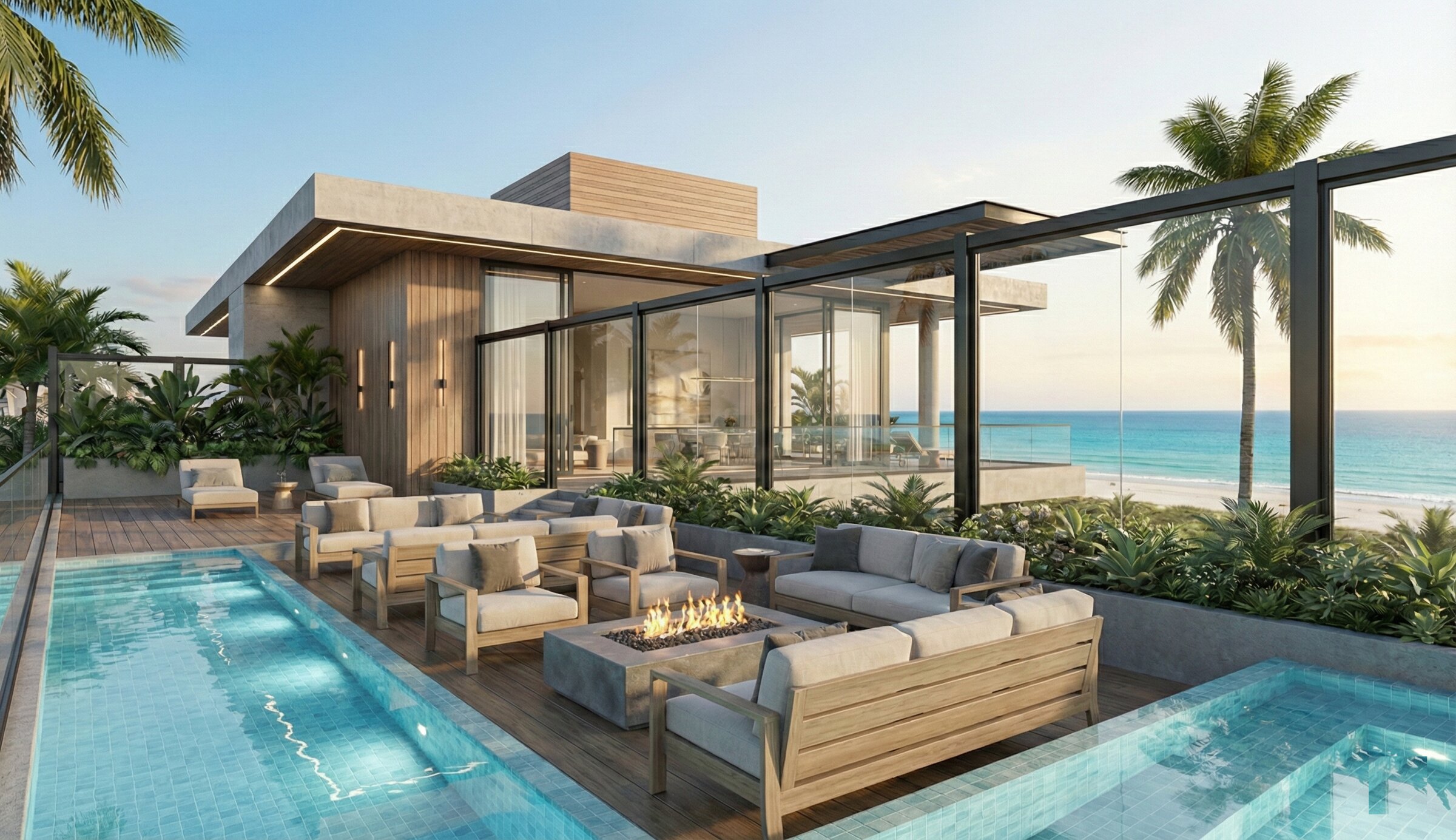
Coastal properties present the most demanding environment for glass fencing systems. The combination of salt-laden air, high wind loads, UV exposure, sand abrasion, and moisture creates accelerated corrosion conditions that destroy standard fencing materials in 2-5 years. Glass itself is impervious to these conditions — it is the hardware, mounting systems, and installation practices that must be specifically engineered for coastal survival. Get the specification right and your glass fence will outlast every other material on the property. Get it wrong and you will be replacing corroded hardware within months.
Important Safety Warnings
- Never use 304 stainless steel, galvanized steel, or standard aluminum hardware within 2,500 feet of the ocean — corrosion failure can be rapid and catastrophic
- Standard glass fencing warranties often exclude coastal corrosion damage. Verify that your warranty explicitly covers marine environment performance before signing.
- Coastal wind loads can exceed standard glass capacity. Never install glass fencing in a hurricane zone without PE-stamped engineering specific to your site wind exposure.
Step-by-Step Instructions
Understand the coastal corrosion environment
Salt air corrosion intensity varies by distance from the waterline. The splash zone (0-500 feet from breaking waves) is the most severe — airborne salt concentration is high enough to corrode standard stainless steel in months. The salt fog zone (500-2,500 feet) still produces significant corrosion but at a slower rate. The marine atmosphere zone (2,500 feet to 2 miles) requires marine-grade materials but is less aggressive. Beyond 2 miles, standard materials may be acceptable. Determine your property distance and zone.
Specify 316 stainless steel for all hardware
Standard 304 stainless steel will pit and corrode in coastal environments within 1-3 years. All exposed metal components must be 316 stainless steel (also called marine-grade stainless). 316 contains molybdenum which provides superior chloride corrosion resistance. Verify every component: posts, brackets, standoffs, fasteners, hinges, latches, anchors, and even set screws. A single 304 fastener in a 316 system creates a galvanic corrosion cell that accelerates failure of both components.
Choose the right surface finish for salt resistance
The surface finish of stainless steel affects its corrosion resistance. Electropolished finishes (mirror-like, chemically polished) provide the best salt air resistance because the process removes surface impurities and creates a thicker chromium oxide passive layer. Brushed finishes (No. 4 satin) are acceptable but require more frequent cleaning. Avoid bead-blasted or rough-textured finishes in severe coastal environments — the textured surface traps salt crystals and moisture.
Address wind load requirements
Coastal properties face higher wind design pressures than inland locations. ASCE 7-22 assigns basic wind speeds based on location and risk category. Coastal areas in Florida, the Gulf Coast, and the Carolinas face design wind speeds of 150-180 mph (compared to 90-115 mph for most inland areas). These higher wind loads require thicker glass, deeper post embedment, heavier-duty anchoring, and more robust structural connections. All of these requirements increase cost but are non-negotiable for code compliance and safety.
Specify hurricane-rated glass where required
In hurricane-prone coastal areas, glass fencing may need to meet impact-resistance requirements. Standard tempered glass shatters under impact from windborne debris. Impact-rated systems use laminated glass with a structural interlayer (SGP or heavy-gauge PVB) that holds the panel together after breakage, maintaining the barrier function. For Florida Building Code compliance in wind-borne debris regions, systems must pass the large missile test (a 9-lb 2x4 lumber shot at the panel at 50 fps) and cyclic wind pressure testing.
Plan the mounting system for coastal conditions
Mounting systems for coastal glass fencing must account for: concrete that is exposed to salt-laden groundwater (specify sulfate-resistant concrete mix), anchor bolts that must resist both pullout and corrosion (316 SS expansion anchors or cast-in-place), and base channels that allow drainage (standing saltwater in channels accelerates crevice corrosion). Core-mounted systems on existing decks must verify that the existing concrete has adequate cover over reinforcement to prevent salt-induced rebar corrosion.
Establish a coastal maintenance schedule
Coastal glass fencing requires more frequent maintenance than inland installations. Monthly: rinse all hardware with fresh water to remove salt deposits. Quarterly: clean glass panels with vinegar solution, inspect all hardware for early corrosion signs, check gaskets and seals. Annually: apply protective wax to stainless steel hardware, verify fastener torque, inspect anchor points for corrosion. Biannually: professional inspection of structural connections and gasket condition. Document all maintenance for warranty compliance.
Verify contractor coastal experience
Coastal glass fencing installation requires specific expertise. Verify that your installer has: documented experience with coastal installations in your specific area, knowledge of local wind and impact code requirements, relationships with marine-grade hardware suppliers, understanding of proper drainage and sealing techniques for salt environments, and warranty terms that explicitly cover coastal corrosion performance. Request references from installations at least 3 years old in similar coastal exposure conditions.
Frequently Asked Questions
Will glass itself corrode in salt air?
No. Glass is chemically inert and unaffected by salt air, UV radiation, sand, or moisture. This is one of the primary advantages of glass fencing in coastal environments — the barrier material itself has unlimited corrosion resistance. The challenge is entirely in the hardware, mounting systems, and metal components. With properly specified marine-grade hardware, a coastal glass fence will outlast every competing material.
What is the difference between 304 and 316 stainless steel?
316 stainless steel contains 2-3% molybdenum, which 304 lacks. This molybdenum content provides dramatically superior resistance to chloride (salt) corrosion. In coastal environments, 304 stainless will develop pitting corrosion and rust staining within 6-24 months. 316 stainless resists chloride corrosion for decades with proper maintenance. The cost premium for 316 is approximately 20-30% over 304, which is negligible compared to replacement costs.
How far from the ocean do I need marine-grade hardware?
The general guideline is: within 500 feet of the waterline — absolutely critical, specify the highest-grade marine materials. 500-2,500 feet — 316 stainless steel is required for reliable performance. 2,500 feet to 2 miles — 316 is recommended, especially if prevailing winds carry salt toward your property. Beyond 2 miles — standard materials are usually adequate unless local conditions create unusual salt exposure.
Can I retrofit existing glass railing hardware to marine grade?
Partial retrofits are possible but not always practical. Individual fasteners, clamps, and surface-mounted hardware can be replaced with 316 stainless equivalents. However, posts, base shoes, and structural channels typically require complete disassembly and replacement. If your existing system uses 304 stainless showing early corrosion signs, replacing all hardware before the corrosion damages the glass mounting surfaces is more cost-effective than waiting for failure.
Is aluminum acceptable for coastal glass railing hardware?
Marine-grade anodized aluminum (6063-T6 with AAMA 611 Class I anodizing) can perform acceptably in marine atmosphere zones (1,000+ feet from water) with regular maintenance. However, in the splash zone and salt fog zone (under 1,000 feet), even marine-grade aluminum will corrode faster than 316 stainless steel. For maximum coastal durability, 316 stainless with electropolished or PVD finish is the superior choice.