Indoor vs. Outdoor Glass Railing Systems
Indoor vs. outdoor glass railings: engineering differences, glass type, hardware requirements, code compliance, cost, and design considerations compared.
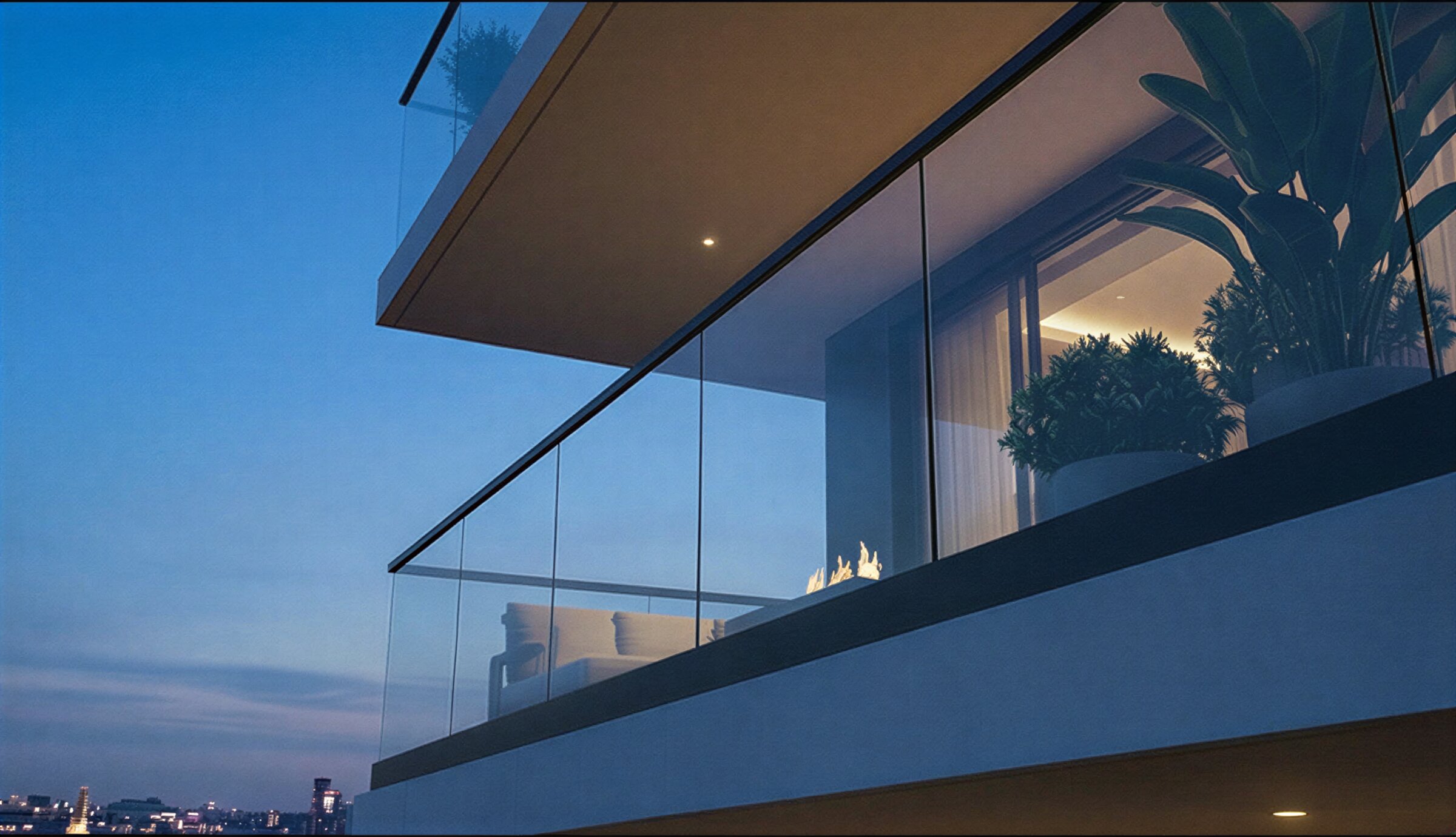
Glass railings are used both inside homes and on exterior decks, balconies, and pool areas — but the engineering requirements are dramatically different. Outdoor glass railings must withstand wind loads, UV exposure, temperature swings, and moisture. Indoor systems face none of these challenges. Understanding these differences helps you spec the right system and avoid over- or under-engineering your project.
Pros & Cons
Indoor Glass Railings
- Thinner glass acceptable (3/8" to 1/2")
- No wind load engineering required
- Any hardware finish suitable (no corrosion concern)
- Lower cost due to reduced engineering
- No weatherproofing needed
- More design flexibility (etched, colored, textured glass)
- Still requires safety glazing (tempered or laminated)
- Guard height codes still apply (36" residential, 42" commercial)
- Must meet IBC/IRC impact requirements
- Fingerprint-prone in high-traffic areas
Outdoor Glass Railings
- Engineered for wind, weather, and temperature extremes
- Creates windbreaks on decks and balconies
- Hurricane-rated options available
- UV-stable for permanent outdoor clarity
- Marine-grade hardware for coastal durability
- Thicker glass required (1/2" to 3/4")
- Wind load engineering adds cost
- Marine-grade or stainless hardware required
- Higher installation complexity
- May require PE-stamped engineering drawings
- More expensive than equivalent indoor system
Feature-by-Feature Comparison
| Feature | Indoor Glass Railings | Outdoor Glass Railings |
|---|---|---|
| Glass Thickness | 3/8" to 1/2" | 1/2" to 3/4" |
| Wind Load Engineering | Not required | Required (ASCE 7-22 calculations) |
| Hardware Material | Standard aluminum or stainless | Marine-grade 316 stainless or anodized aluminum |
| Glass Type | Tempered (standard) | Tempered or laminated (application-dependent) |
| Code Requirements | Guard height + safety glazing | Guard height + safety glazing + wind load + impact rating |
| Cost | $100-$300/ft | $200-$500+/ft |
| Engineering Drawings | Rarely required | Often required (PE-stamped) |
| UV Considerations | Minimal (indirect light) | Critical (direct sun exposure) |
| Thermal Movement | Negligible | Must accommodate expansion/contraction |
| Drainage | Not applicable | Base shoes must drain; no water pooling |
Best For: Which Should You Choose?
The Verdict
Indoor glass railings benefit from simpler engineering, thinner glass, and standard hardware — making them significantly less expensive. Outdoor glass railings require full wind load engineering, thicker glass, marine-grade hardware, and professional installation — costing roughly 2x as much. Never cut corners by using indoor-spec systems outdoors. The cost difference exists because the engineering requirements are genuinely more demanding.
Frequently Asked Questions
Can I use indoor-rated glass railings outdoors?
No. Indoor glass railing systems are not engineered for wind loads, UV exposure, moisture, or temperature cycling. Using indoor-spec hardware or thinner glass outdoors can result in structural failure, code violations, and liability. Always spec outdoor-rated systems for any exterior application.
Why are outdoor glass railings so much more expensive?
Three main cost drivers: (1) thicker glass — outdoor panels require 1/2" to 3/4" glass vs. 3/8" for indoor, roughly doubling the glass cost; (2) marine-grade hardware — 316 stainless steel costs 3-5x more than standard aluminum; (3) engineering — wind load calculations and PE-stamped drawings add $500-$2,000+ to the project. These costs are not optional — they are code requirements.
Do indoor glass railings need tempered glass?
Yes. Building codes (IBC/IRC) require safety glazing for all guards and railings regardless of location. Safety glazing means tempered glass (which breaks into small granules) or laminated glass (which holds together when broken). Standard annealed glass is never acceptable for railings, indoors or out.
What is the difference between 316 and 304 stainless steel hardware?
304 stainless is suitable for indoor and mild outdoor use. 316 stainless (marine-grade) contains molybdenum for superior corrosion resistance and is required for coastal, pool, and heavy weather exposure. Using 304 hardware in salt air environments leads to tea staining and corrosion within 1-2 years. INFINITYGLASS uses 316 stainless for all outdoor systems.
Does INFINITYGLASS offer both indoor and outdoor systems?
INFINITYGLASS specializes in outdoor-rated systems engineered for the most demanding conditions, including hurricane zones. The Boundless (frameless) and Framed (post-mounted) systems are both rated for exterior use with PE-stamped engineering. These systems can also be used indoors where premium quality and structural performance are desired.
How do temperature swings affect outdoor glass railings?
Outdoor glass railings must accommodate thermal expansion and contraction. A 48-inch glass panel can expand or contract approximately 0.02 inches over a 100°F temperature swing. While small, this movement must be accommodated by the mounting system using flexible gaskets and proper clearances. Indoor systems face negligible temperature variation and do not require thermal movement provisions. Improperly installed outdoor systems that do not accommodate thermal movement can develop stress fractures.
Do outdoor glass railings need special cleaning?
Outdoor glass requires more frequent cleaning than indoor due to rain spots, dust, pollen, salt spray (coastal), and environmental deposits. For most outdoor installations, cleaning every 4-8 weeks maintains clarity. Coastal installations may need monthly rinsing to prevent salt accumulation on hardware. Indoor glass typically needs cleaning only for fingerprints, especially in high-traffic staircase applications.
What wind speed can outdoor glass railings handle?
Outdoor glass railings are engineered for specific wind speed zones per ASCE 7-22 requirements. Standard systems handle 110-130 mph wind speeds. Hurricane-rated systems with laminated glass and reinforced mounting handle 150-180+ mph. The engineering considers wind exposure category, building height, and terrain. Indoor systems have no wind load requirements, which is why they can use thinner, less expensive glass.
More Comparisons
Back to Glass Fencing Guide | Cost Guide | How-To Guides | Solutions | Glossary